

A childhood ambition takes a student from a Hong Kong classroom to the United Nations headquarters in New York, and offers a grounded view of what it means to build peace.
At 17, Kobo Woo was asked to write down his biggest dream. While other students might have named a university or a career, he wrote: “Working at the United Nations.”
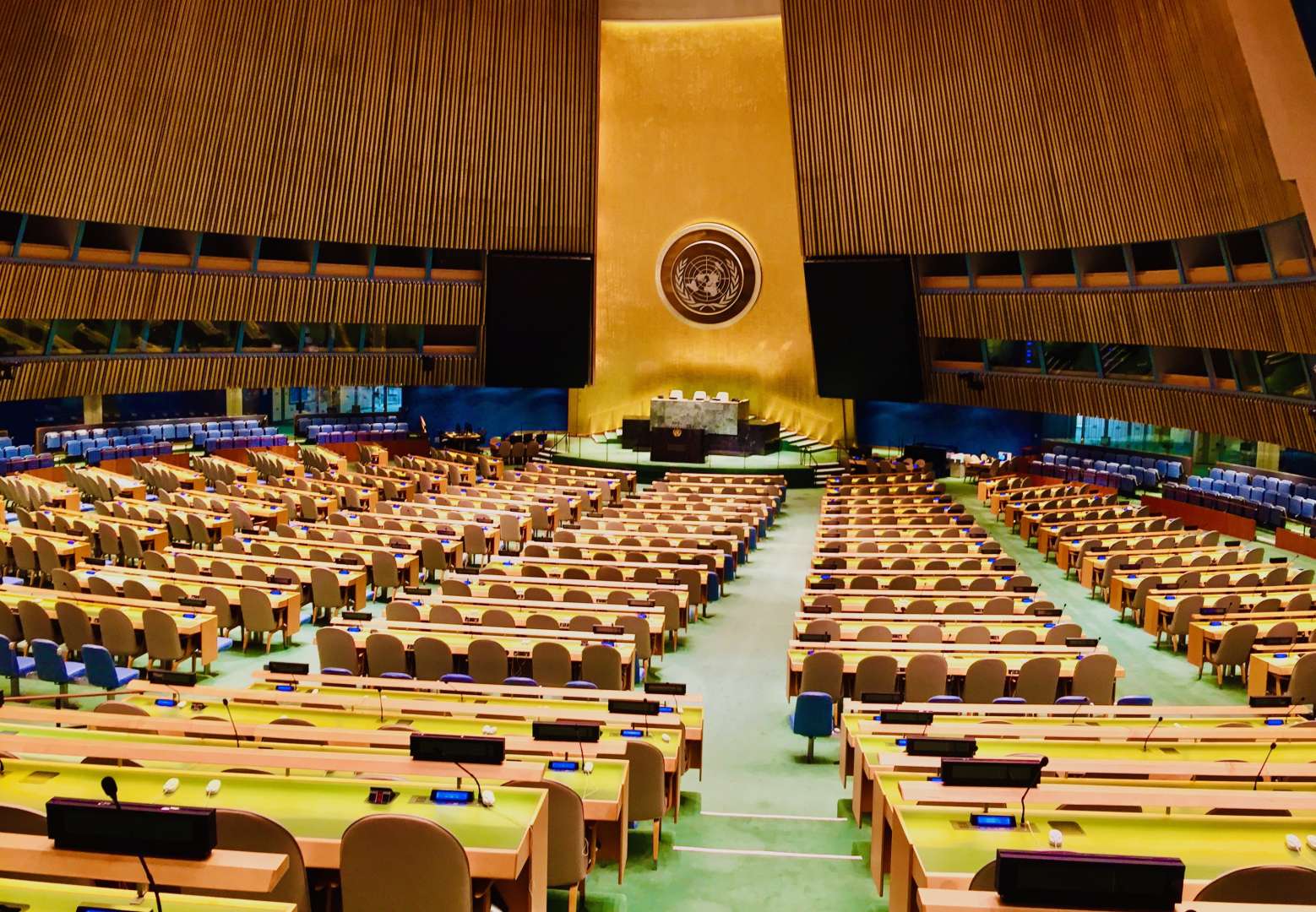
Seven years later, that ambition took him to the UN headquarters in New York, where he worked across peacekeeping missions in some of the world’s most fragile states. His journey was far from straightforward: it involved 300 job applications, a detour into marketing, a string of short-term contracts, and the constant uncertainty of working in a highly competitive field.
Yet his dream continued to guide his choices. “I wasn’t sure if I could do it. It seemed so far away for a secondary student,” he says. “But looking back, I really did it.”
When a Dream Took Shape
His interest in the UN began much earlier. At six, his mother brought home a brochure on the UN Convention on the Rights of the Child, introducing him to the idea that children have the right to be free from harm.
The brochure opened up a world of global affairs, politics and diplomacy. Kobo then followed international news, read history books and travelogues, and grew fascinated by different countries, languages and cultures.
The same year, watching the 9/11 attacks on television left him wondering: “Life is so vulnerable. Could someone help stop violence and maintain peace?”
That curiosity found a clearer direction when he joined the Hong Kong 200 Leadership Project, through which he developed leadership skills, volunteered in the community and learned how to build trust across groups.
One exercise became a turning point: putting his dream of working at the UN into words. “I always had an idea,” he says. “But that was the first time I wrote it down and said, 『This is something I want to do.’”
The programme also connected him with seniors and mentors who offered practical advice. After entering university, he returned as a coordinator, guiding younger participants through similar decisions about their studies and futures.
“Everyone who joins Hong Kong 200 has a passion to serve and lead,” he says. “When you combine passion and connection, that’s really powerful.”
300 Job Applications
Kobo began planning for his career early. He mapped out his goals, researched academic routes, and identified the qualifications and experiences that could bring him closer to his dream.
He studied history, geography and economics at secondary school before pursuing international relations at undergraduate and postgraduate levels. He also completed online courses, read widely and sought advice from mentors.
But that was only the beginning. During an exchange, an academic adviser showed him that international relations was far broader than he expected, from international political economy and comparative politics to security, diplomacy, research and policy.
At 20, he assumed he had plenty of time to decide. His adviser offered a more demanding perspective: time, too, was competitive. Ambition, he came to understand, requires preparation, a sequence of decisions and the humility to seek advice from those who have walked the path.
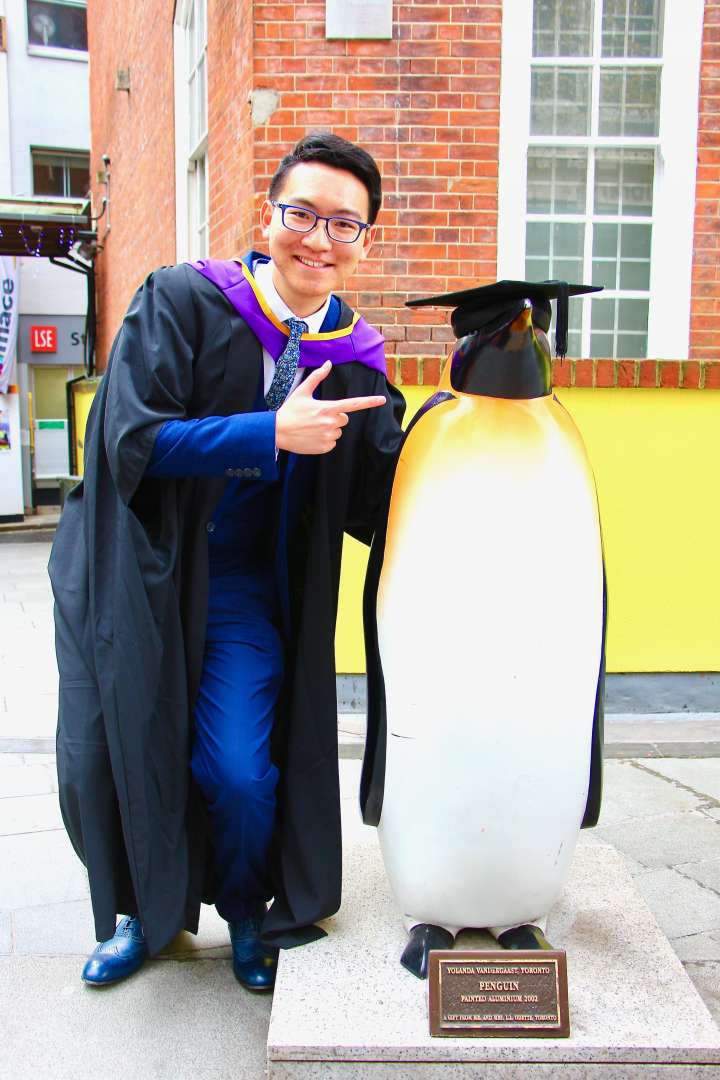
After graduating from the London School of Economics and Political Science, Kobo came home and fired off 300 job applications. He briefly worked in marketing before securing a UN internship in New York, becoming a consultant six months later.
If you never try, you’ll never know.
Peacekeeping at the UN
His role focused on monitoring and evaluating peacekeeping operations. His team collected data and assessed the performance of 12 missions, using the analysis to inform reports for the Security Council and the Secretary-General.
His days involved meetings with colleagues in Mali, DR Congo, Lebanon and beyond. He gathered information, analysed changing conditions, prepared reports and briefed member states on resource use.
The work spanned 17 time zones. Urgent meetings could take place in the middle of the night, while political upheavals or security alerts could shift priorities within hours.
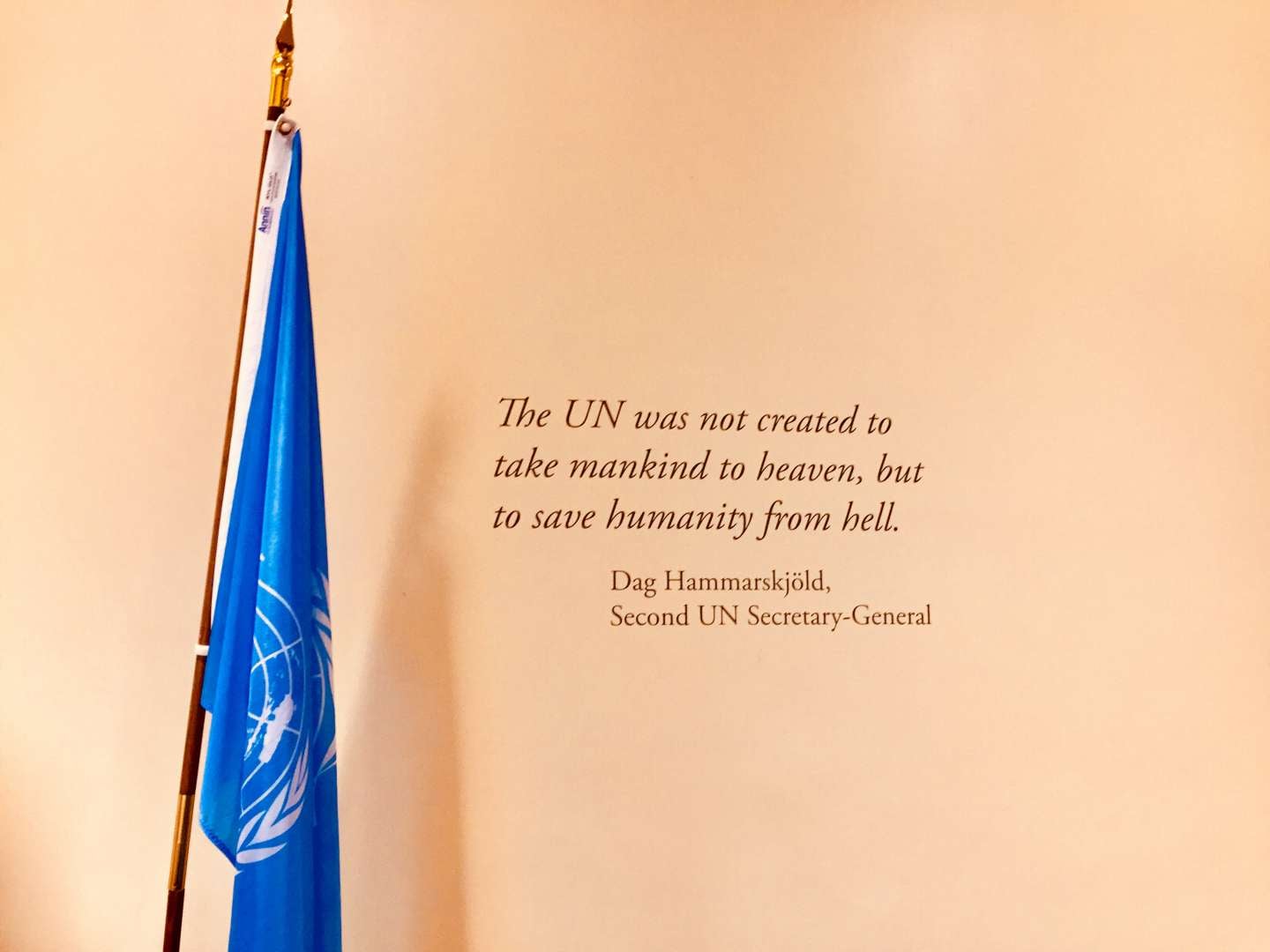
The experience also changed his understanding of peace: peacekeeping often means preventing a situation from escalating, rather than eliminating conflict.
A long-serving colleague told him that, in places like the Democratic Republic of the Congo, it had taken decades just to maintain the status quo. That, too, was an achievement.
“Peace isn’t only about creating a peaceful environment,” he says. “It’s also about protecting civilians, restoring justice, implementing peace agreements, clearing landmines and helping communities rebuild.”
The role placed a premium on composure. His team operated around the clock, while colleagues in the field faced risks that were difficult to comprehend from New York.
During one video call, colleagues in Mali received an alert that a missile was approaching their compound. They had to leave the meeting and take shelter in a bunker.
“To survive in this line of work, you have to be confident and resilient,” Kobo says. “The contexts and the conflicts change every day. You have to adapt.”
His year and a half at the UN eventually helped him see where he wanted to focus next. While peacekeeping addresses security and stability, he felt that children affected by conflict and natural disasters needed more long-term support.
That commitment led him to Save the Children International, where his work centres on child protection and humanitarian assistance.
Writing to Share
After the UN, Kobo started documenting his experience on Threads (@kobo__san), writing about work, life and the reality of pursuing a career in international relations.
The posts found an audience interested in international relations and humanitarian work. He began connecting with them and helping some review their resumes, and has since done so for 30 to 40 people, including mid-career professionals.
For him, this is another expression of the Hong Kong 200 spirit: paying it forward.
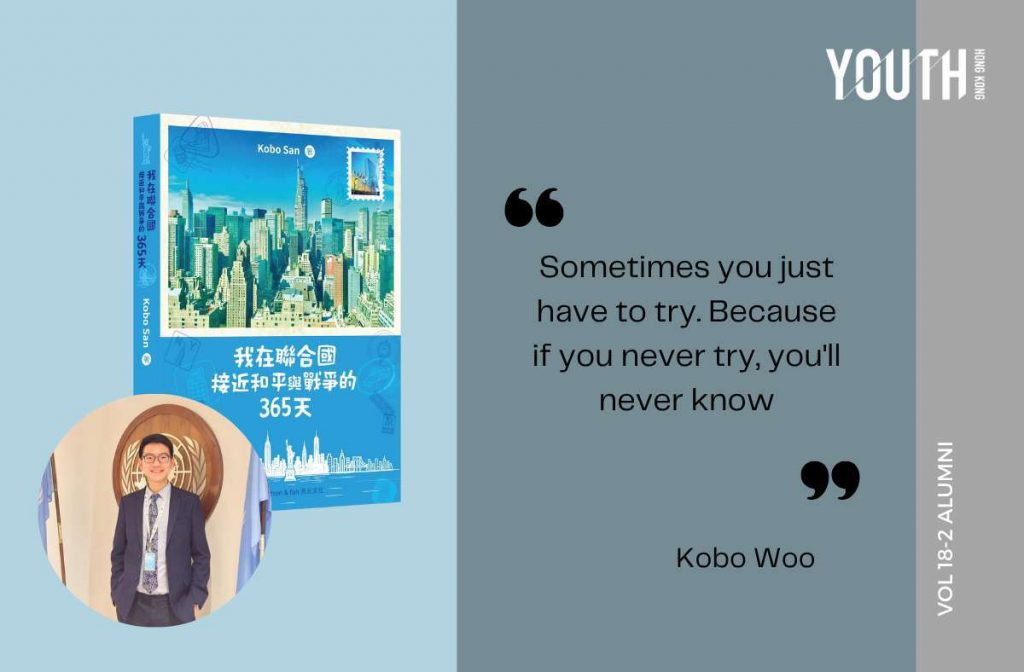
His book, My 365 Days with the UN Between Peace and War (我在聯合國接近和平與戰爭的365天), grew from the same faith. It chronicles the unexpected turns behind a seemingly glamorous career. Its success surprised him, after it became a bestseller during the Hong Kong Book Fair.
Working at the UN has not made Kobo believe that world peace is easy or fully attainable. Instead, he has learned that change happens, slowly and collectively.
“In the darkest places, where you see many desperate children and families, this is also where you can see humanity and hope,” he says.
His advice to young people is to dream big, but define “big” on their own terms. It might mean working for the UN, opening a cafe, travelling the world or helping someone nearby.
“Sometimes you just have to try,” he says. “Because if you never try, you’ll never know.” ■
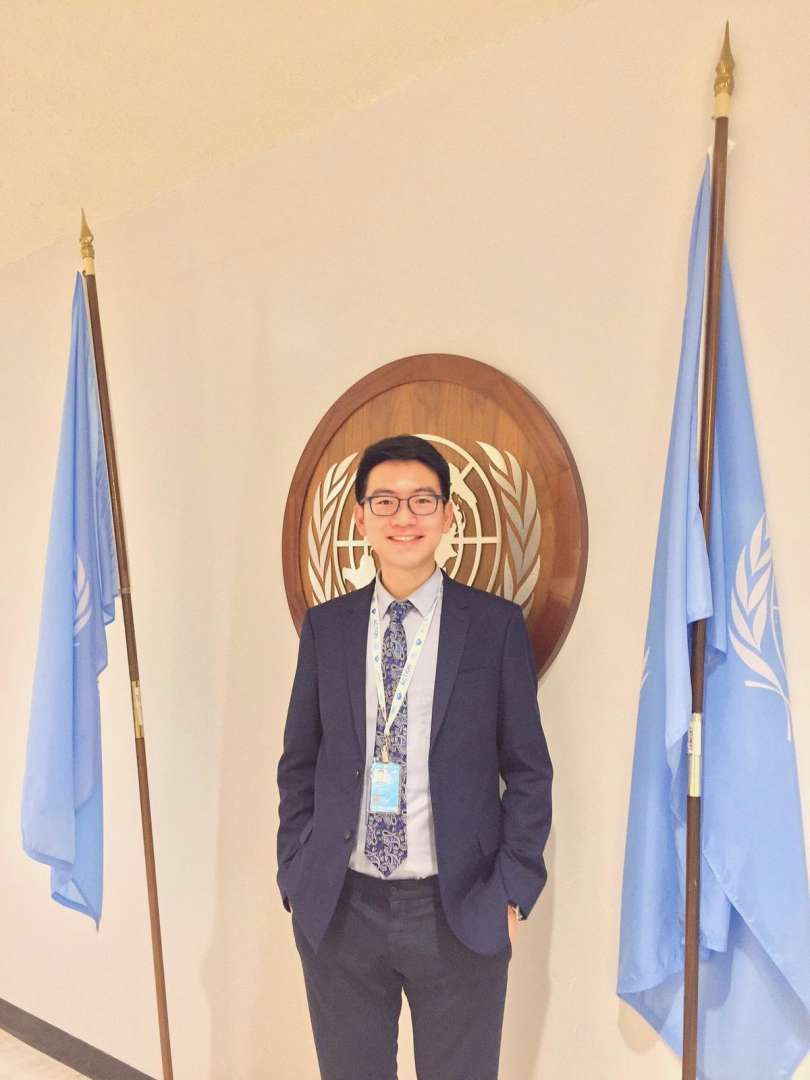
Now based in London, Kobo Woo is an international affairs professional and author who has worked at the United Nations headquarters in New York. He is an alumnus and former coordinator of the Federation’s Hong Kong 200 Leadership Project.