
by Ally Pok
Hong Kong’s streets are full of objects we barely notice, until we stop and realise that each tells a story of its own, revealing layers of the city’s social history, regulatory shifts and the evolving relationship between public space and pedestrian life.
Morrison Lights
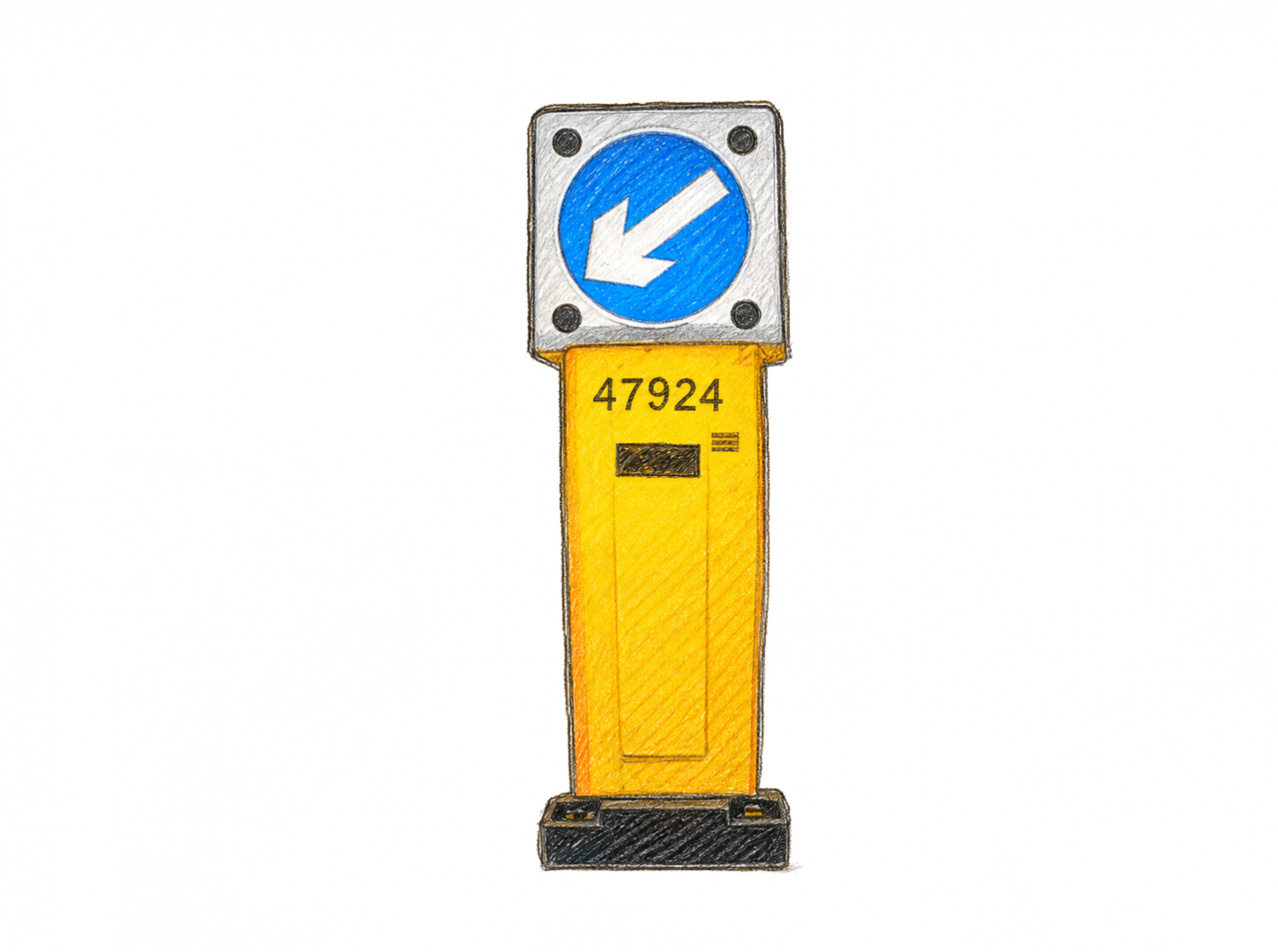
Most people will recognise the bollard lights on pedestrian safety islands, with their white cubic “head”, yellow “body” and blue “face”. Known as the “Morrison light”, the design was introduced from the United Kingdom into Hong Kong in 1973 and named after Morrison, the then Senior Superintendent of the Traffic Wing of the Hong Kong Police. The design was based on the then British illuminated bollard lights, which used the words “turn left” to indicate direction. However, in Hong Kong, the instruction was simplified to a single arrow, making it easier for both Chinese- and English-speaking drivers to understand.
Over time, these traffic bollards have been modified and replaced, with newer models like the “Flecta” and the “Night Owl”. These models now use reflected headlights instead of electricity and are more resistant to damage in the event of a collision.
Even so, Morrison lights remain in use at bends or on roads with low visibility, where illuminated guidance is still deemed necessary for safety. Their distinctive appearance has become a quiet but enduring part of Hong Kong’s urban landscape.
Newsstands
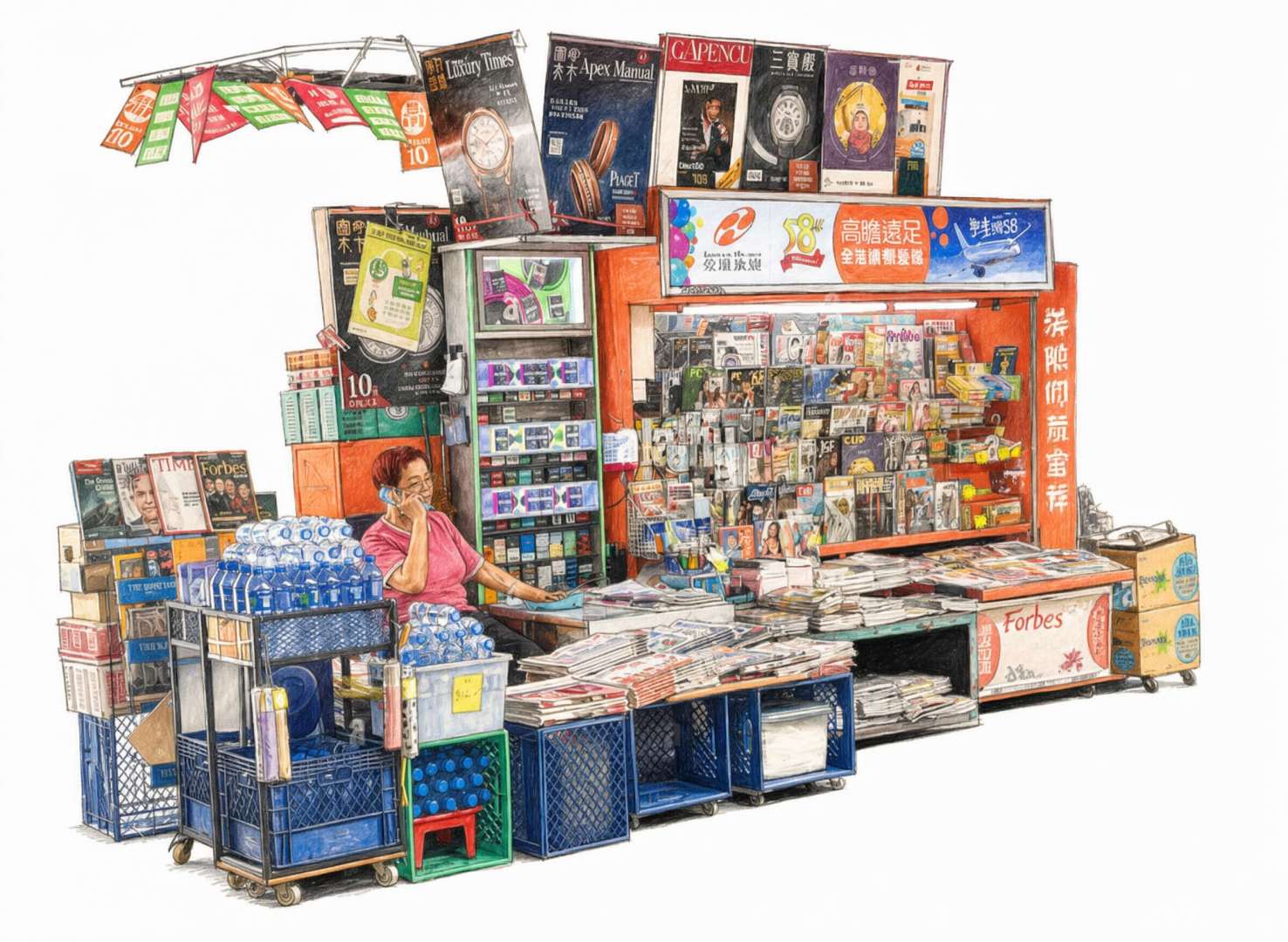
Once a very familiar part of Hong Kong’s daily rhythm, newsstands are slowly disappearing from the streetscape. In the 1990s, the city had about 2,500 newsstands. By 2018, the figure had dropped to around 400, and just three years later, only about 350 remained.
Hong Kong’s first newsstand opened in 1904 at the Peak Tram Terminal, selling the English-language South China Morning Post to the mostly wealthy expatriates and visitors, as Chinese were not permitted to live in that area. Initially serving only Western customers, newsstands expanded alongside the city’s growing population, becoming especially more important from the 1970s onwards, when public interest in current affairs fuelled a boom in the print news industry.
Newstands also served a social purpose. The government issued licences to people with disabilities, giving many a means of livelihood. At their peak in the 1980s and 1990s, some stalls sold more than 1,000 copies daily across 20 titles. Newsstands were widespread and often clustered near teahouses, while also serving as competitive frontlines for publishers.
Today, online news and social media have transformed residents’ reading and consuming habits. As the government has stopped issuing new licences and prohibits transfers, it is harder for the businesses to renew themselves, especially for young people. With current daily sales now often below 100 copies, many vendors rely on selling cigarettes, drinks and snacks, with some no longer selling newspapers at all.
Gas Lamps
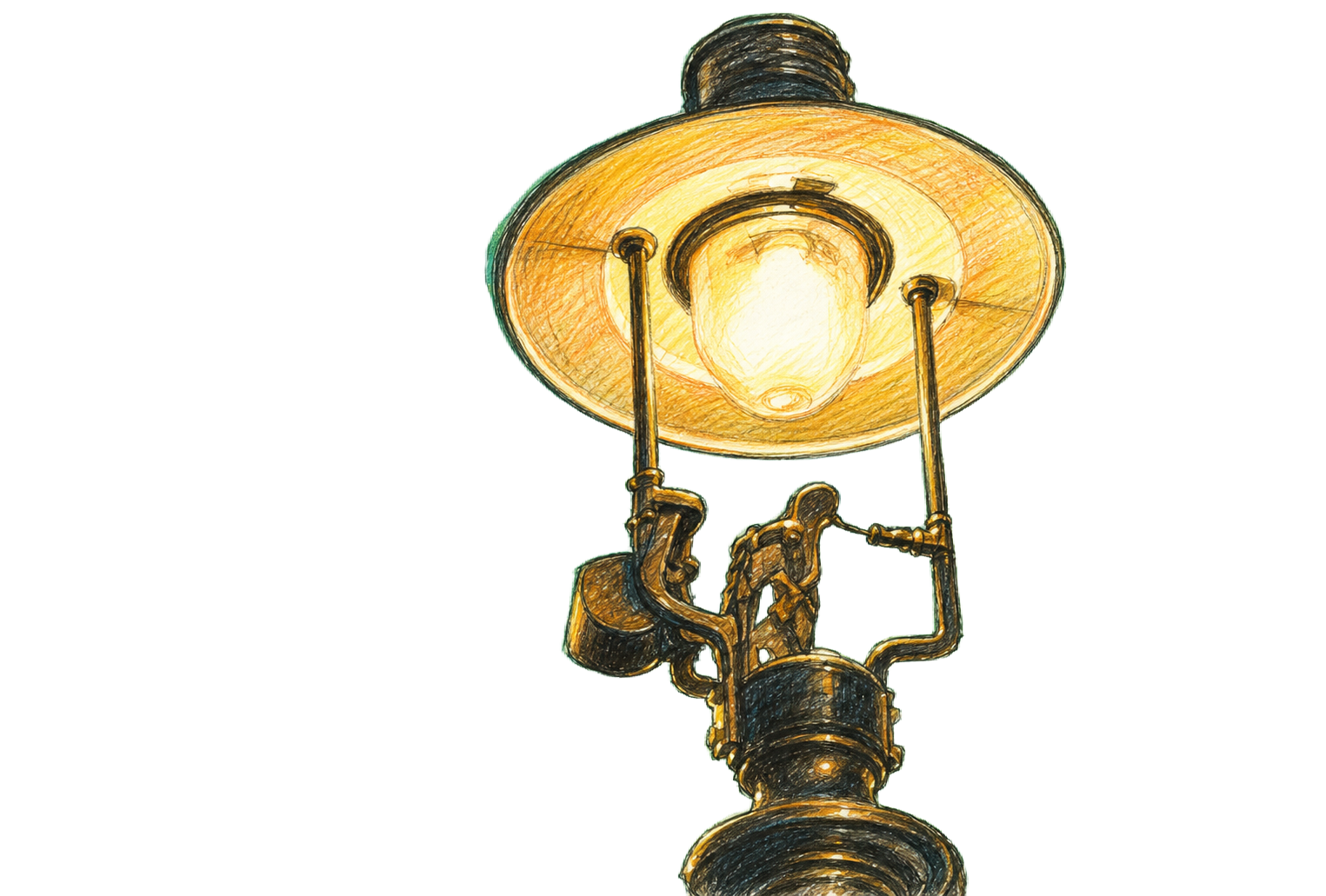
Sitting quietly in the heart of Hong Kong, four working gas lamps still glow as a rare survival in today’s electricity city. This corner of Duddell Street is now an elegant tourist spot and movie location that feels almost suspended in time.
The first public gas street lamp in Hong Kong was installed at West Point (Shek Tong Tsui) in 1864, two years after the Hong Kong and China Gas Company was established. Gas lighting offered a more extensive and reliable alternative to oil lamps. From the mid-19th century to the early 20th century, they were installed widely in the city, with lamplighters rushing through streets and alleys at dawn and dusk to turn the lamps off and on manually.
After the Second World War, as electrical lighting emerged as a powerful substitute for gas lighting, most of the gas lamps in Hong Kong were switched off forever. In 1964, the four gas lamps on Duddell Street were the only ones to survive.
Recognising their value, the government in 1979 declared the four lamps on Duddell Street, as well as the century-old granite steps on which they are located, historical monuments. Since then, experts and engineers have put great effort into keeping them shining.
In 2018, super typhoon Mangkhut toppled several trees nearby, seriously damaging the steps on Duddell Street and breaking three out of the four lamps and a lamp post. Fortunately, they were all carefully restored by experts from the Antiquities and Monuments Office and the manufacturer in the United Kingdom. Duddell Street was reopened in 2019. Today, these gas lamps are still lighting up this small corner of a Hong Kong street.
Cylindrical Postboxes
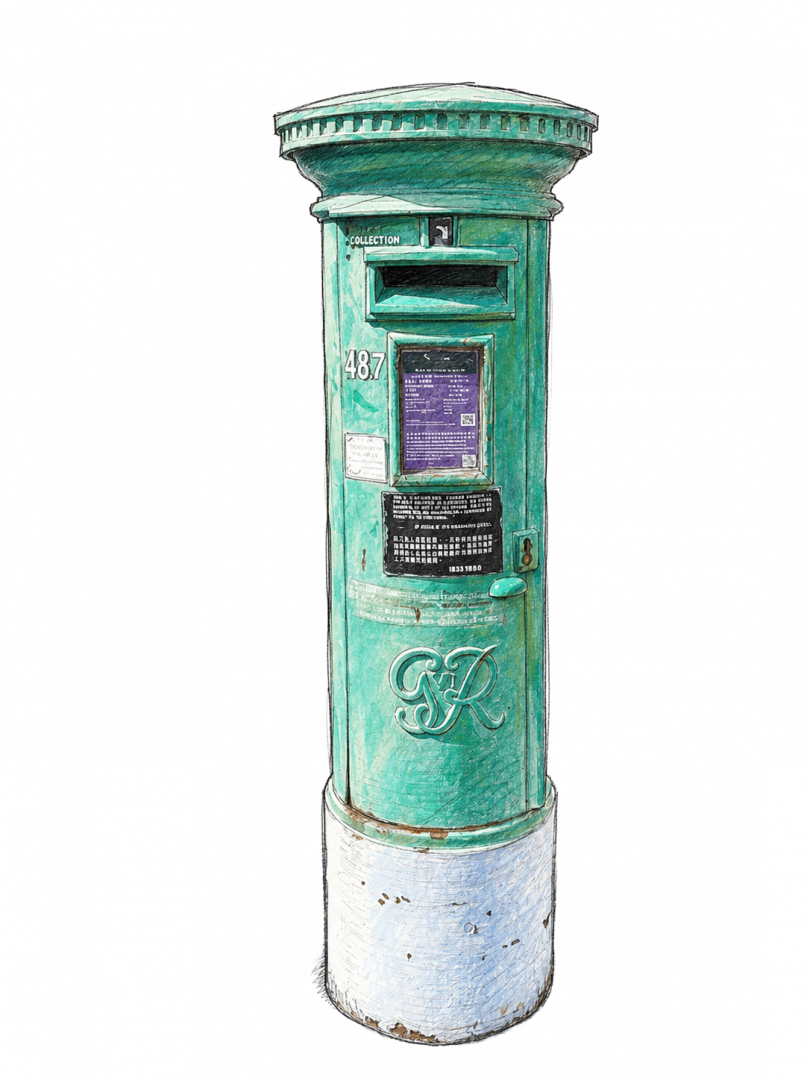
Hong Kong’s postboxes are easy to overlook, but they carry a layered history, with about 1,170 in the city, and 65 of them dating back to the colonial era. Scattered across the New Territories, Kowloon and offshore islands, they were all repainted green from red after the 1997 handover, with 59 still bearing royal insignia.
The oldest surviving examples carry Queen Victoria’s (1837-1901) mark, which are preserved for display only, and others featuring those of King George V (1910-1936), King George VI (1936-1952) and Queen Elizabeth II (1952-2022) are still in use.
The early boxes were cast in iron, whereas newer models are made of fibreglass. One uniquely large postbox, which bears a Scottish insignia, can still be found in Statue Square, Central.
From the 1960s to the 90s, some boxes were fitted with mechanical stamp-vending machines selling 10-cent stamps. The feature was welcomed, especially when post offices were closed for the day. These boxes were known by the Chinese nickname, the “piggyback posting box (揹仔郵筒)”, because the add-on resembled a child riding on his or her mother’s back. However, these postboxes have since disappeared from the streets. ■