

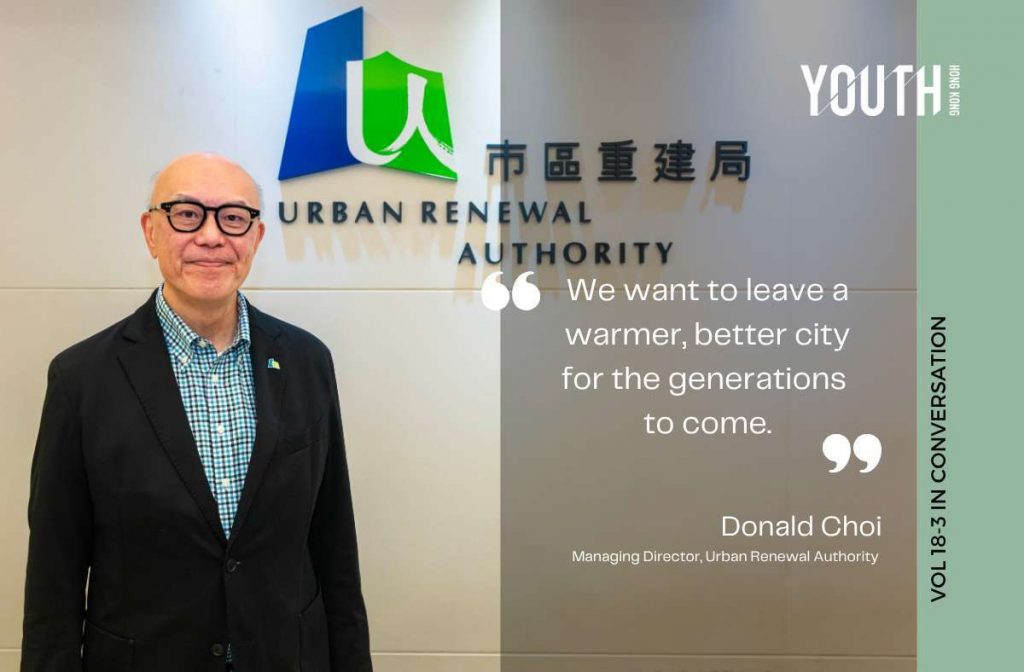
Donald Choi, URA’s Managing Director, shares his perspective on balancing historical memory with modern liveability.
Urban development is not simply demolish and rebuild — out with the old, in with the new. In a dense metropolis like Hong Kong, city planning is a delicate craft.
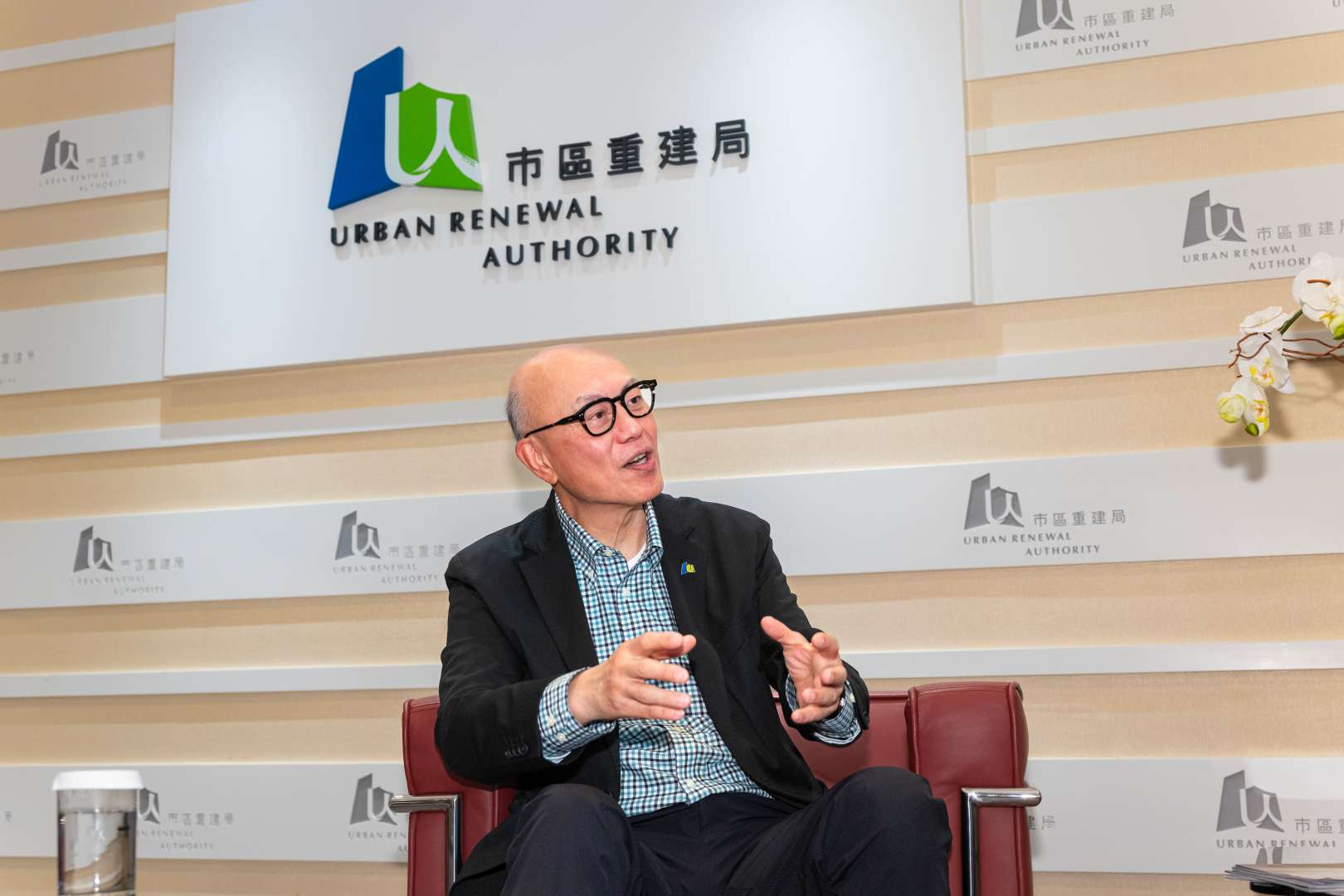
Ar Donald Choi Wun-hing, Managing Director of the Urban Renewal Authority (URA), shares his vision of a city built with a mixture of modern skyscrapers, heritage buildings and unique community identity. He is mindful of the delicate balance between preservation and economic values, placing liveability and sustainability at the heart of the URA’s work. A significant shift is already taking place, moving beyond piecemeal redevelopments towards a more holistic, “people-first” district-based urban regeneration.
The “4R” Approach
For many citizens, urban renewal has long been equated with the demolition of dilapidated buildings to make way for skyscrapers, dealing with sites one by one. Choi emphasises that the URA’s mandate is now guided by a comprehensive “4R” framework: Redevelopment, Rehabilitation, pReservation, and Revitalisation.
“In the past, we often looked at projects in isolation,” he explains. “That approach fell short of unlocking the full potential and social value that urban renewal could bring. Instead, the URA now views renewal through the lens of interconnected neighbourhoods.”
“A city is defined by much more than its skyline. Its character and community warmth reside in the spaces between — the streets and alleys where daily life unfolds. Replacing these cherished spaces with four-lane highways completely dismantles the unique spirit of a neighbourhood. Whether it is a mature canopy of trees or a local corner shop, these landmarks are woven into the lives of generations. Guided by community feedback, we are dedicated to preserving the places and heritage that carry deep sentimental meaning for residents,” Choi says.
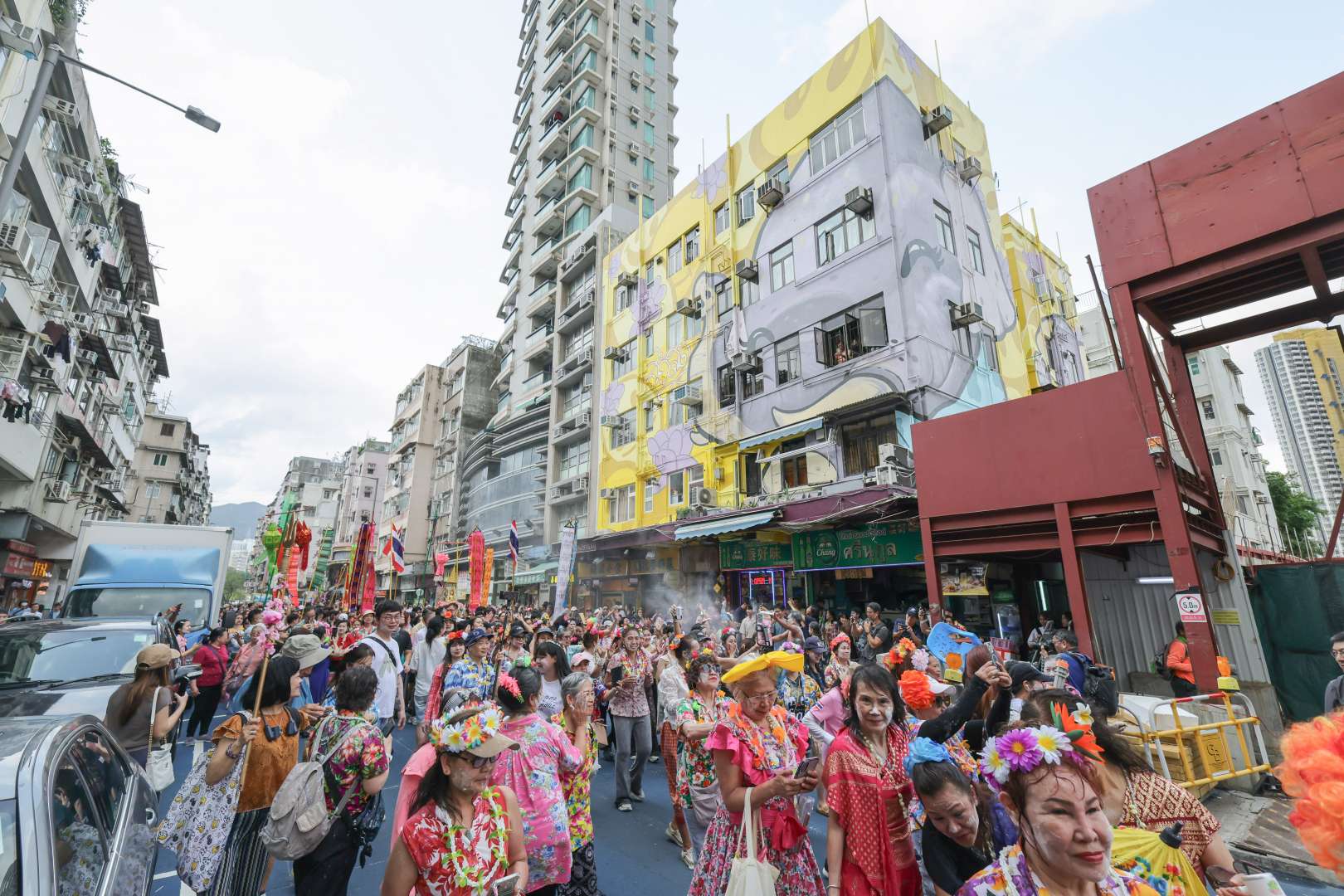
URA preserves the unique character of older districts through initiatives such as themed murals and the promotion of the Songkran Festival in Kowloon City.
For instance, in the heart of the Kowloon City District, Thai and Chiu Chow cultural traditions, such as the annual Songkran Festival and Yu Lan Festival, are being lovingly preserved. To breathe new life into the neighbourhood, Thai artists were invited to paint murals on the facades of buildings, capturing and celebrating the unique spirit of the local Thai community.
In assessing the historical significance of buildings, the URA works closely with the Antiquities and Monuments Office, alongside its own teams of architects and planners who engage conservation experts to conduct comprehensive, site-specific assessments. Nonetheless, Choi cautions against the imposition of rigid thresholds: “Selection criteria must not be dogmatic. We cannot simply demolish all the pre-war buildings that fail to meet modern standards. Rather, we are committed to actively engaging in public consultation to ascertain what the community truly values.”
What we do today shapes tomorrow’s history.
Balancing Heritage and Economy
Striking a sustainable equilibrium between heritage conservation and economic viability constitutes one of the most formidable challenges in urban renewal. Projects that turn into lifeless museum pieces risk losing relevance, whereas excessive commercialisation turns authentic old districts into sterile tourist traps.
Nonetheless, Choi rejects the premise that economic viability and preservation are mutually exclusive, citing the government’s Transfer of Plot Ratio (TPR) scheme. “Generating sustainable revenue streams,” he says, “is vital to supporting cultural development and fostering youth entrepreneurship.” The TPR mechanism provides market-driven incentives and regulatory flexibility, enabling developers to transfer the unutilised plot ratio from buildings designated for preservation within seven of the city’s oldest neighbourhoods, thereby enhancing the overall financial viability of urban renewal projects.
Drawing upon the Central Market as an illustrative case in point, Choi emphasises that successful preservation inherently requires adaptive reuse. Rather than maintaining a traditional wet market, which would struggle to remain economically viable in the current context, the landmark has been meticulously transformed into a vibrant “playground for all.” This revitalised community hub features food stalls, cafes and dedicated spaces allocated to aspiring young local entrepreneurs under the “Made in Hong Kong” initiative, blending historic heritage with contemporary social utility.
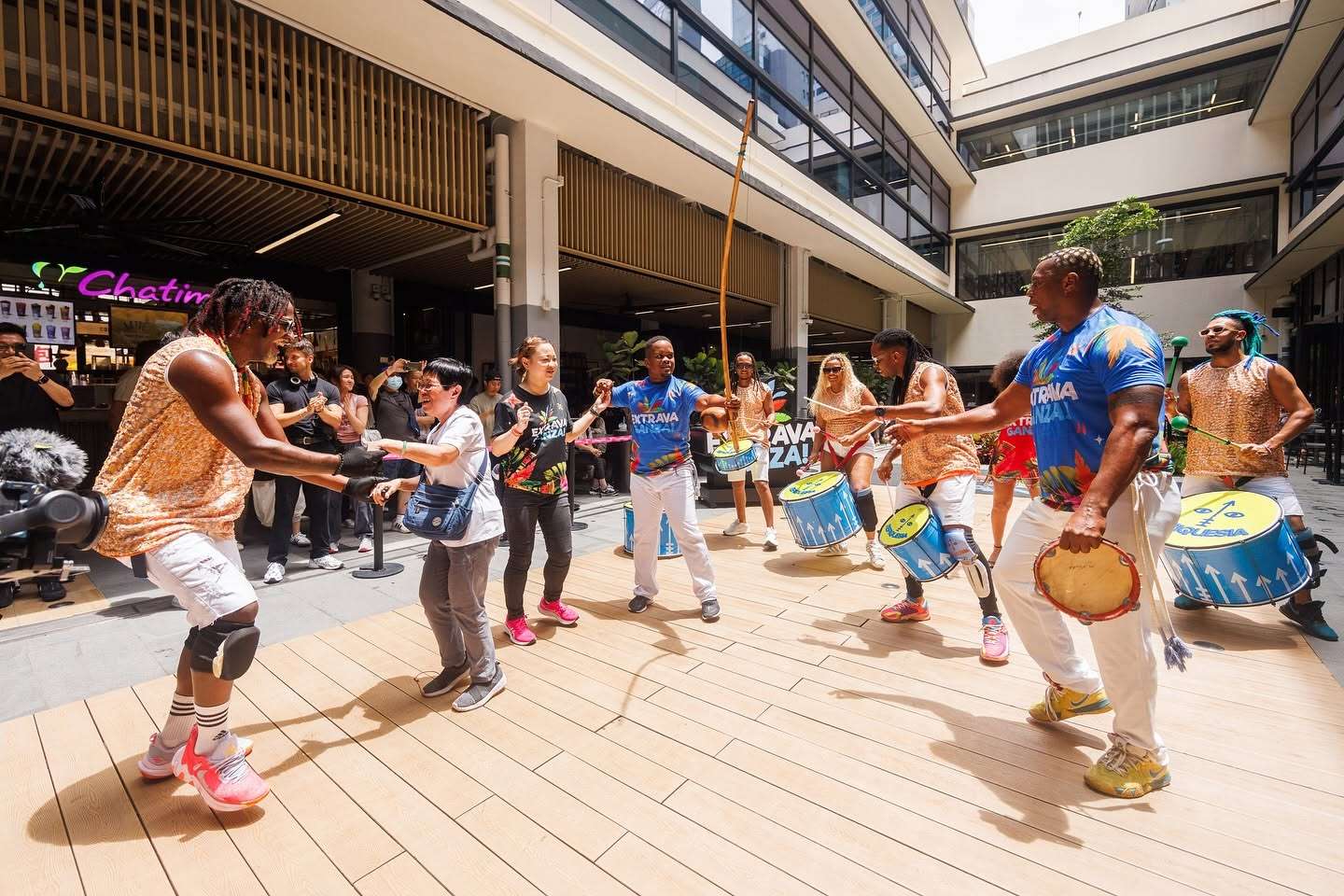
The revitalised Central Market hosts a variety of community and cultural events, and has become a “playground for all” within the bustling city.
Similarly, recent policy adjustments facilitate gross floor area exemptions to enable the possibility of installing lifts in old tenement buildings where structurally feasible, thereby significantly enhancing the mobility and quality of life of the elderly residents. Choi maintains that resources should be channelled to serve the broader public interest rather than merely generating private gain.
Under this progressive planning philosophy, historic structures can be preserved without compromising their inherent development rights, and underutilised spaces can be productively capitalised upon without diminishing aggregate land values. Ultimately, developmental “profits” are reinvested to fund the construction of public parks and essential community facilities, securing a greater net benefit for the community as a whole.
Rather than perceiving urban density as a constraint, Choi advocates for innovative architectural and planning interventions integrated with decentralised, community-led management models. When a local initiative successfully enhances neighbourhood liveability, creates green public spaces, and stimulates economic activity across the wider district, it yields substantial, enduring social value that extends far into the future.
In evaluating project outcomes, Choi stresses that the URA weighs qualitative feedback from end-users, such as local shopkeepers and residents, alongside comprehensive, district-wide economic and social datasets. He posits that success and failure are rarely absolute, particularly when evaluated through a long-term perspective, underlining the fundamental principle that urban redevelopment must continuously evolve in tandem with the times.
Setting World-Class Standards
Choi underscores Hong Kong’s unique natural resources, alongside its rich historical and cultural heritage. “We want to leave a warmer, better city for the generations to come. We cannot simply consume all of our natural, cultural, or economic resources today, leaving nothing behind for our children.” He emphasises the critical importance of sustainable development and intergenerational equity.
Looking ahead, Choi is confident that Hong Kong is uniquely positioned to establish new global benchmarks. Drawing a parallel with the enduring legacy of the Italian Renaissance, he suggests that Hong Kong should aspire to standards of excellence so profound that they will continue to attract visitors from around the world 50 or 100 years from now.
“What we do today shapes tomorrow’s history,” Choi says. “The legacy we pass on is not merely about preserving the achievements of the past, but enriching that heritage with our own contributions for the benefit of those who follow.” ■