


by Oscar Cheung
A unique perspective on how today’s boys have to navigate identity, misogyny, and the digital world.
I watched the Netflix series, Adolescence, the moment it dropped in March 2025 and was completely blindsided by its riveting plot. It wasn’t until my rewatch, after the cast, directors, and writers swept eight awards at the Emmys, that I moved past the shock factor and began examining the underlying messages. What I found was that the social commentary hit incredibly close to home.
Spanning four episodes, the series follows the events surrounding Jamie and the alleged murder of his schoolmate, Katie. The show traces the fallout from Jamie’s arrest, the police investigation at his school, one of his sessions with Briony, a forensic psychologist, and the lingering impact on his family one year after the incident, revealing complicated factors of cyberbullying, peer pressure, social media, bullying, toxic masculinity, mental health, and modern parenting in the digital age
Adolescence garnered critical acclaim, particularly for its direction and cinematography: each hour-long episode was filmed in a single continuous shot. One review from The Guardian hailed it as “the closest thing to TV perfection in decades”.
Beyond its technical flair, Adolescence confronts problems young men face in the modern world. Teenage boys struggle with self-identity, which is exacerbated by inadequate support systems and uninhibited access to social media. In turn, some may become radicalised and spew misogyny that harms girls and women.
Quiet Pressure
I have been studying at a boys’ school for the past five years. As with relatively homogeneous environments, there is a quiet pressure to conform. It is always much easier to make friends with shared interests. This year, I started watching live football. It has been enjoyable, especially joining in post-match banter. However, I often worry that my newfound passion might stem from the fear of not meeting a stereotypical standard of masculinity.
Adolescence actually made me question if I was jumping on the football bandwagon because of its reputation of being a “manly” pursuit. Jamie was taken by his father, Eddie, to football and boxing because he thought it would “toughen him up”. Of course, this reinforces the long-standing cultural expectation that boys should be sporty, or at least be interested in sports. In a way, I see some resemblance between Jamie and me: neither of us is athletic, but creative. Jamie in drawing; me in creative writing.
“All kids really need is one thing that makes them feel okay about themselves.”
— Detective Sergeant Misha Frank, Adolescence
Looking back, I see in myself a subconscious need to fit into a masculine narrative, resulting in attempts at a more confident gait, lifting weights for muscular arms (to no avail), or changing my taste in music.
I realise my idea of masculinity is fragile: I feel insecure about the way I present myself, fearing that I might be seen as effeminate. There’s nothing inherently wrong with walking differently, having lanky arms, or listening to “basic” pop music, but there is always a voice in the background insisting that these are emasculating characteristics, leaving me to wonder whether my self-identity is being submerged in exchange for popularity or a closer rapport among my peers.
Who Is to Blame
The journey towards individuality becomes even more treacherous without the guidance of trusted adults. Adolescence concludes with Eddie weeping on Jamie’s bed and whispering into his teddy bear: “I’m sorry, son. I should’ve done better.” Parents undeniably shape their children’s safety and self-worth, but that responsibility is complicated in the digital age, as they are not in control of social media’s influence on their children. Schools fare no better. When teachers already shoulder endless administrative work, can we realistically expect them to act as friends, advocates, and counsellors? And when they’re overwhelmed, can we really blame them?
We live in a digital world utterly unlike that of our parents and teachers. Social media, while revolutionising how teenagers connect to the world, has amplified online hate speech. One prominent influencer emerging from the manosphere, an anti-feminist online network of male communities, is Andrew Tate, who has propagated aggressive sexist views on TikTok since 2022. His inflammatory rhetoric denying the existence of depression, demeaning women as property of men, and even blaming victims of sexual assault has infiltrated schools worldwide. Even my schoolmates have incessantly reposted his videos on Instagram Stories. While I found his opinion appalling and muted such content, it still appealed to a global audience of young men. Why?
Perhaps because his wrapped message of male chauvinism was presented in the guise of self-improvement. Tate’s videos flaunting supercars, mansions, and luxury watches — using material wealth to project images of success — were bound to resonate with teenagers vulnerable to external influence, as they seek identity development. Followers misconstrued aggression, dominance and sexism as hallmarks of masculinity leading to prosperity, without considering the toxicity of it all.
It is worth noting here that Tate has been charged with rape and human trafficking in Romania and the UK. He should never be seen as a role model, let alone the epitome of masculinity.
The misogyny that echoes Tate’s beliefs permeates Adolescence. Briony’s psychological assessment notes that Katie wasn’t Jamie’s type because she was “flat”, highlighting his overt objectification of girls. When questioned about the night of the murder, Jamie says, “I could have touched any part of her body. I really wanted to, but I didn’t. Most boys would’ve touched her, so that makes me better.”
I was chilled to the bone by this particular quote. How can refraining from sexually assaulting a girl, but then murdering her, be framed as moral superiority? That this logic comes from a 13-year-old child is terrifying.
Dismantling Stereotypes
In our daily lives, prejudice against women often manifests itself in seemingly innocuous sayings. The jokes that a teacher is “on her period” when she reprimands students; or teasing someone for “running like a girl” in PE lessons; or telling a friend to “man up” when he’s upset, reflect pervasive stereotypes that harm people of all genders and have led to countless cases of gender-based violence.
In 2024, three girls, aged 6 to 9, were stabbed to death at a Taylor Swift-themed dance workshop in the UK by a 17-year-old boy, who was believed to be influenced by radical materials online. In 2025, a 14-year-old boy in Malaysia was arrested for killing a 16-year-old girl, a case authorities linked to unchecked social media exposure. These are but two instances highlighting how online radicalisation produces tangible, harrowing effects.
The plot of Adolescence serves as a stark reminder of how easily innocence can be eroded by toxic masculinity. Insecure young men, regardless of age or background, are being exploited under the guise of empowerment. They are indoctrinated by sexism and become its messengers. Hate speech online can then translate into ruthless acts offline, endangering the lives of others. And the perpetrators don’t look like monsters. Many viewers of the show, myself included, were thrown by the incongruence of Jamie’s doe-eyed physical appearance and his vile, misogynistic thoughts and deeds.
As modern-day adolescents, we must navigate both real and digital worlds while trying to define ourselves. Our egos are fragile, and we instinctively cling to things that affirm our self-worth.
Dismantling masculine stereotypes is easier said than done. But what if we relied on each other more than on online influencers? What if we lent an empathetic ear to our friends, refusing to partake in discriminatory discourse? Or if we were less judgmental or hypercritical? Instead, what if we wove a support network where everyone feels seen? Then, the plot of Adolescence might just remain in the realm of fiction. ■
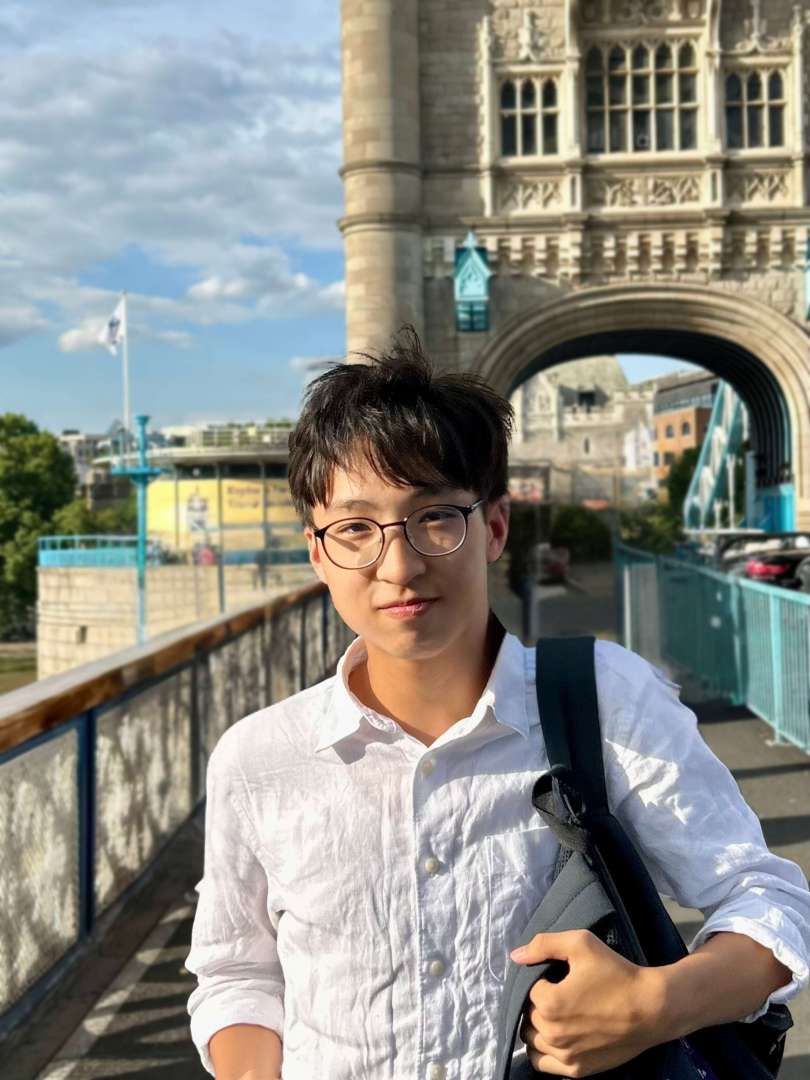
Oscar Cheung, 16, is a member of Youth Hong Kong’s young writers team. He is from St. Paul’s College and participated in the HKFYG English Public Speaking Contest. Passionate about writing, music, and most importantly, life, he strives to find joy in the most mundane things and share that happiness with those around him.