

Urban planning might sound massive, but Alan Cheung proves it actually starts small — listening to local communities to design the everyday details that matter.
When Alan Cheung talks about cities, he doesn’t begin with floor plans or building codes. He starts with people.
As the co-founder of Onebite, Cheung has spent the past decade trying to reshape how the city thinks about public space, community engagement and urban planning. Rather than focusing only on spectacular buildings, his interdisciplinary design company also works at ground level, in housing estates, public toilets, sports grounds, heritage shops or underused corners of the city. Onebite’s philosophy is simple: how can we make places that people truly enjoy?
“We’ve been lucky to work on big developments in both the Chinese Mainland and Hong Kong,” Cheung recalls the excitement of winning global awards and building huge mixed-use complexes using innovative materials. “But when we returned to some of these sites, we realised we could have built them almost anywhere. They didn’t really belong to the local context.”
What stayed with him were the smaller projects: NGO renovations and community spaces where he could watch people use what he had helped create. “The design isn’t luxurious, but you see the smiling faces, or hear complaints. That’s when you feel you really designed for people.”
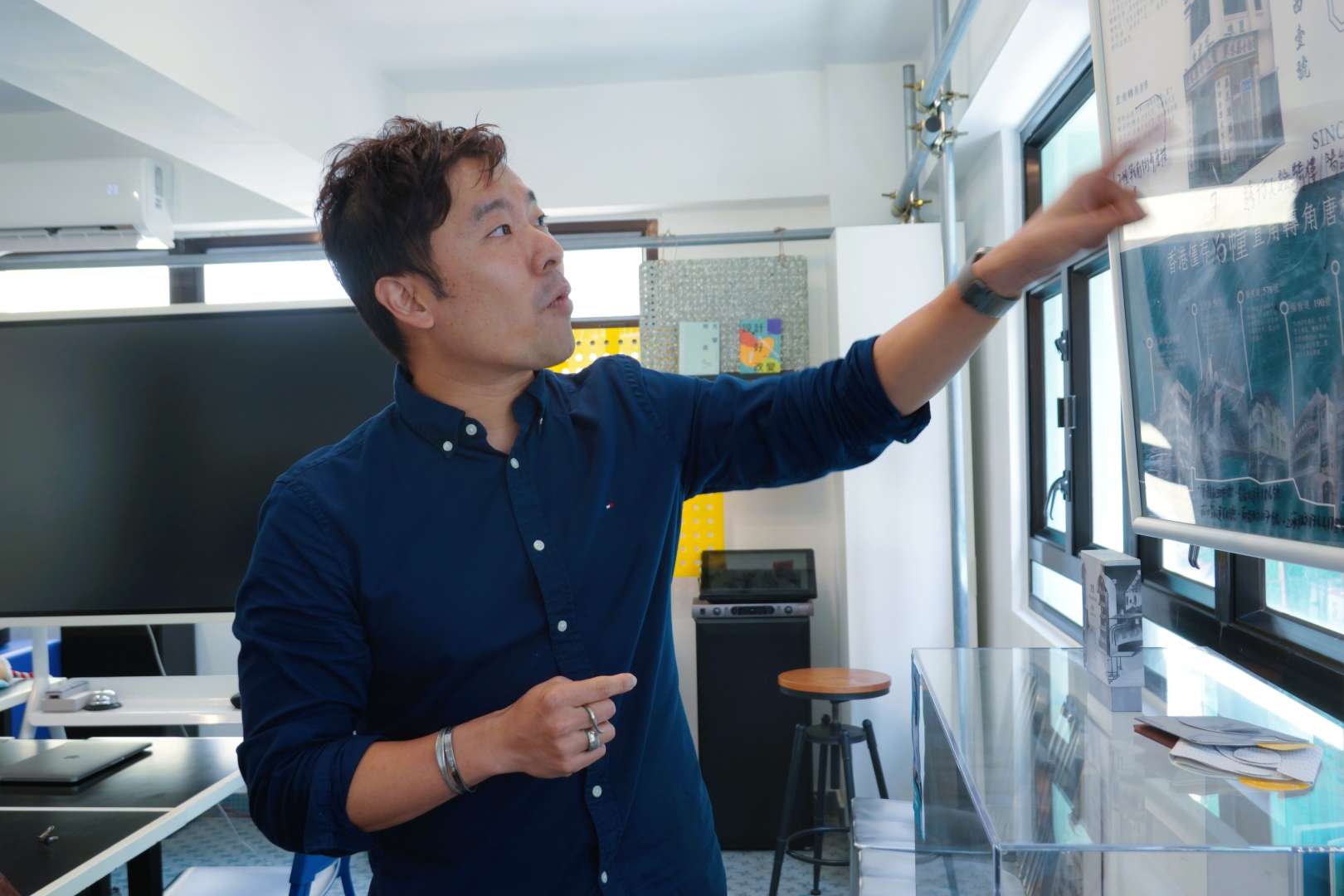
Alan Cheung, co-founder of Onebite, shares how human-centric design and participatory community engagement transform everyday urban spaces.
Design for People
Onebite began in 2015 with a simple idea: everyone deserves “one bite” of design. The name is deliberately accessible and playful.
“In Chinese, ‘Onebite’ (一口) is easy for elderly people to read,” Cheung explains. “It connects to food — everyone likes eating. We wanted people to taste a bit of design, then tell us what they want.”
That commitment to listening led to One Bite Social (一口舍群) in 2017, a community-focused arm that uses design to engage overlooked groups, including elderly residents, disabled users, women and pet owners.
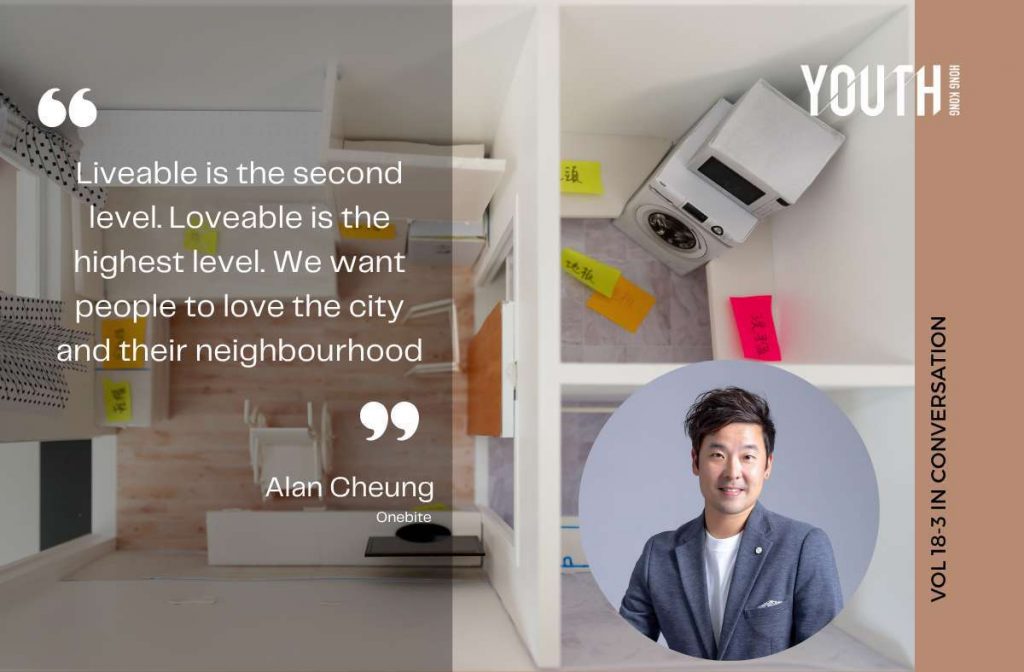
“In Hong Kong, we talk a lot about function and practicality,” Cheung says. “But it is harder to say whether somewhere is truly liveable. For us, liveable is the second level. Loveable is the highest level. We want people to love the city and their neighbourhood.”
The idea of placemaking developed from mid-20th-century urban planning and design theory, when urban pioneers like Jane Jacobs and William H. Whyte argued that cities should be designed for people, not just cars and commerce.
For Cheung, genuine place-making is not a buzzword, branding or decoration, but an understanding that a place’s history, culture and everyday rhythms are important and that building with its community rather than over it is respect.
He acknowledges that profit pressures, bureaucracy and top-down decisions can dilute good intentions. Yet he has also found clients willing to learn. “We show them prototypes, then use them as examples to persuade other clients,” he says. “That is how change happens: one project, one step at a time.”

Sai Kung Hoi Arts Festival is an open-air art experience curated by Onebite.
Bread, Doors and Toilets
Cheung’s favourite way to explain community engagement is through baking. “Sometimes people find the whole idea of ‘design’ too abstract,” he says. “But everyone understands making bread.”
Onebite’s six-step process begins by creating a safe space where people can be heard. The team identify key needs from the many ideas that emerge, gather perspectives as the “dough” ferments, shape the options and eventually “bake” them into reality. Then comes the crucial final stage: taste the result together, evaluate it honestly, and give it to those who helped create it.
“Evaluation is hard,” Cheung admits. “Usually, after the defect liability period is over, everyone moves on. But we like to bring people back, even if we are not paid. They should see how their ideas became real.”
He shares the example from a public-housing project with elderly residents who live on their own. In a typical studio apartment, the kitchen and bathroom sit side by side. Most designers would give each room its own door, while an elderly participant suggested one sliding door across both.
“If you are in the bathroom, you can close it. If you are cooking something with a strong smell, you slide it to keep it contained. When guests visit, you can give them privacy,” Cheung says. “It saves space and money, and the idea came completely from a user.”
Four years later, when Onebite brought the group back to see the refurbished flats, the same participant pointed at the sliding door and said proudly: “This is my design.”
“We must be humble and open-minded,” he says. “Community members can give us sparks we never would have thought of. Then we help turn those sparks into something even better.”
Public toilets became another unexpectedly rich design challenge. In a two-year design-thinking project, Onebite looked beyond fixtures and finishes to management, maintenance and, crucially, users. They convened “toilet masters”: everyday users, elderly people, disabled users, parents, cleaners and even the chairman of the Hong Kong Men’s Association.
“He told us that in some public toilets, you have to walk past the entrance of the women’s toilets to reach the men’s,” Cheung says. “You are simply trying to go to the toilet, but women may think you are looking inside and feel uncomfortable. As designers, we had not noticed that at all.”
The workshops also revealed that many accessible toilets had been designed only for right-handed wheelchair users. After hearing directly from disabled users, the government changed its barrier-free access guidelines.
“It was a small adjustment, but it made a huge difference,” Cheung says. “We constantly overlook some groups, and we need to hear their voices to correct us.”
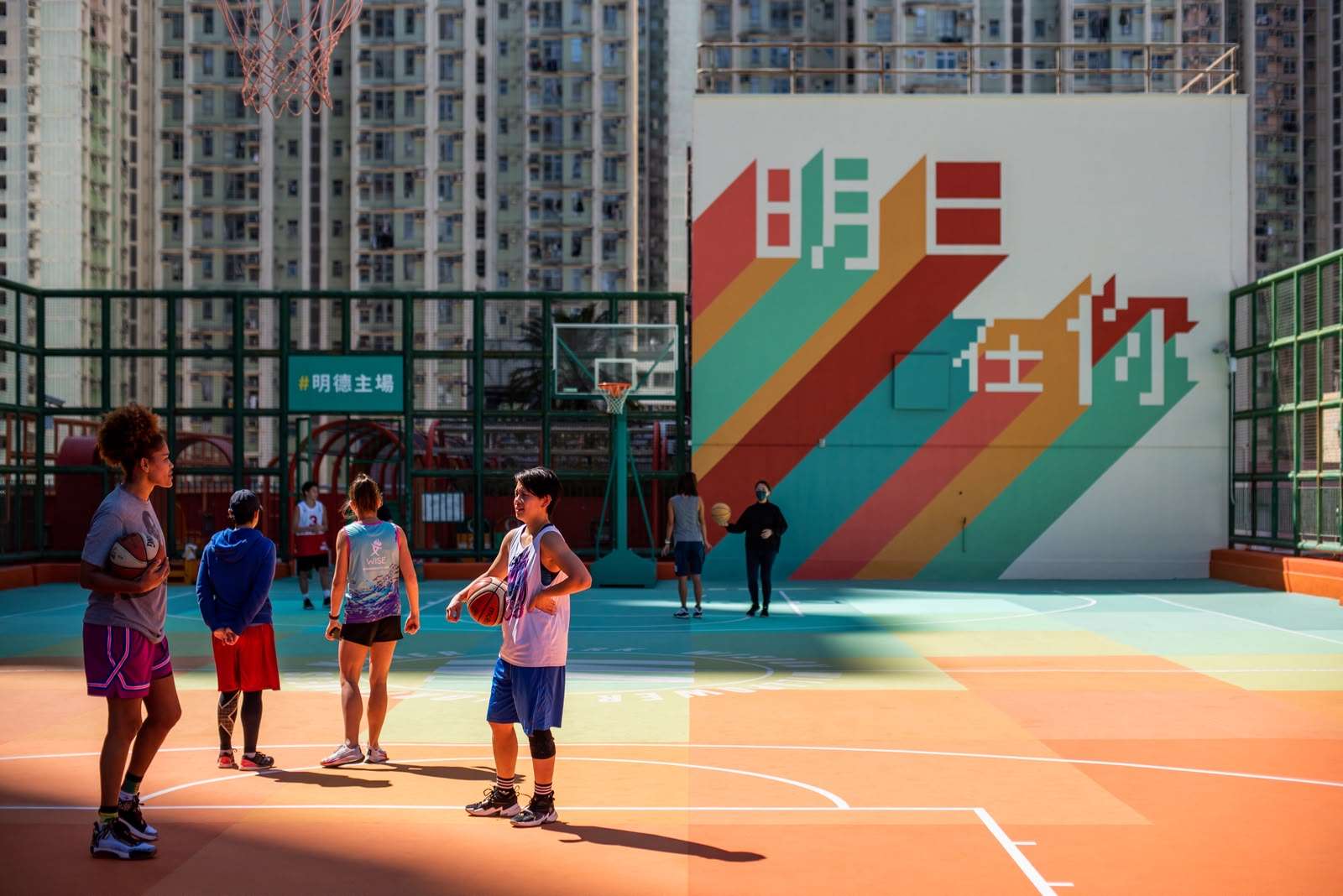
Ming Tak sports court features multipurpose amenities such as stretch bars, sit-up benches, mirrors and hooks.
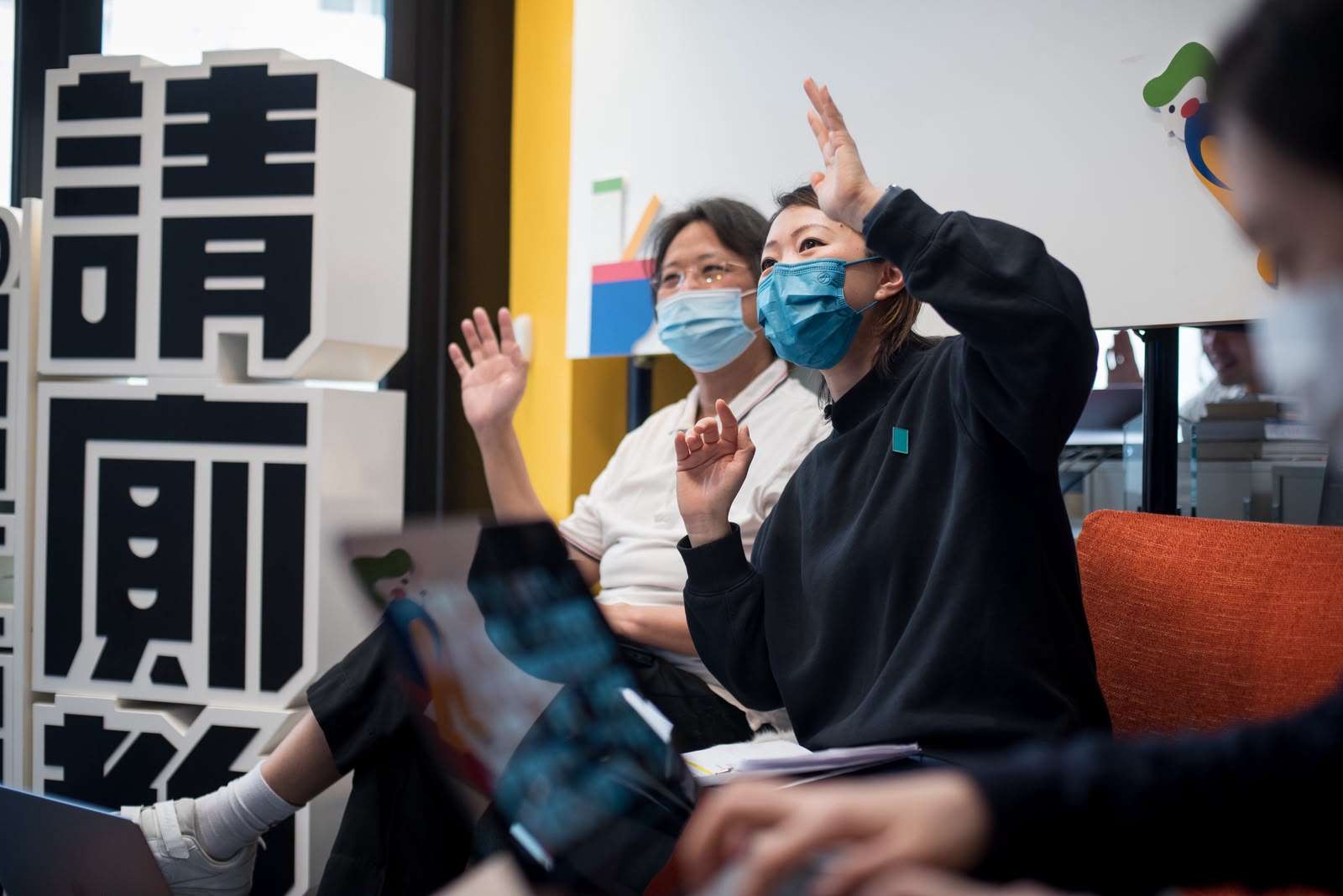
Toilet Tells: Rediscover Public Toilet is a design-thinking programme to revamp public restroom design and services.
Women, Pets and Young Co-Creators
A basketball-court project offered another lesson. A client survey showed that female players often felt invisible in the design and programming of sports spaces. Working with Women Sports Empowered Hong Kong, Onebite added simple details: hooks and ledges for handbags along the fence, as well as mirrors.
“It is a small idea,” Cheung says, “but it shifts the message: sports spaces are for women too.”
Pets became another lens on changing urban demographics. Cheung points to the scarcity of dog-friendly areas in older districts, and the tension that arises when pet owners occupy pavements and small parks. Onebite’s research platform “Urban Matters” responds to these questions through playful “Urban Candy”, themed bite-sized explorations of topics like pets, gender and healing in the city. “Because candy is something you can taste,” he says. “We share knowledge, collect data, and tell stories. It’s a way to help people see how everyday issues are all connected to urban planning.”
Cheung is especially hopeful when young people become active participants rather than passive observers. During work on the redevelopment of Wah Fu Estate, a public housing estate located in Hong Kong’s Southern District, Onebite recruited around ten teenagers and young adults as ambassadors. They now run Wah Fu Lounge, curate exhibitions about the estate’s past and future, and help residents understand the changes ahead.
“It’s a cycle,” Cheung says. “We connect dots and provide resources, but ultimately we want young people to pick up the work themselves.”
Asked to sum up the thread that ties his projects together, from sliding doors and public toilets to hooks in parks and art festivals, Cheung pauses. “One bite at a time,” he says at last.
“Changes will come,” Cheung says. “But we cannot be too fast or too aggressive. Like bread, good places need time to rise. You start with one bite. After the first bite, there will be more bites, more steps.” ■
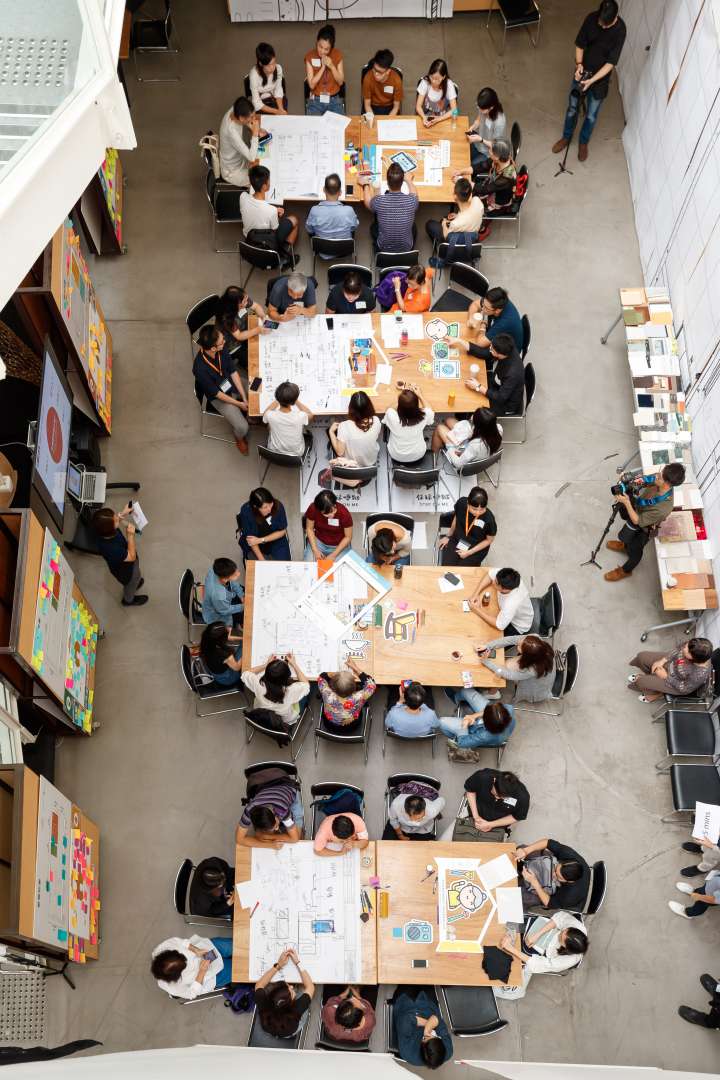
participants collaborate in a co-creation workshop to design a showflat for senior independent living.