

Kadoorie Farm & Botanic Garden (KFBG), a non-profit conservation institute focused on nature conservation, holistic education and sustainable living, explains why ecological planning must come first in development plans.
As Hong Kong pushes forward with new urban development initiatives, nature conservation and urban growth should not be vying goals. Instead, it is crucial to incorporate ecological considerations “strongly and early” in the planning process, according to Wander Meijer, Executive Director of KFBG.
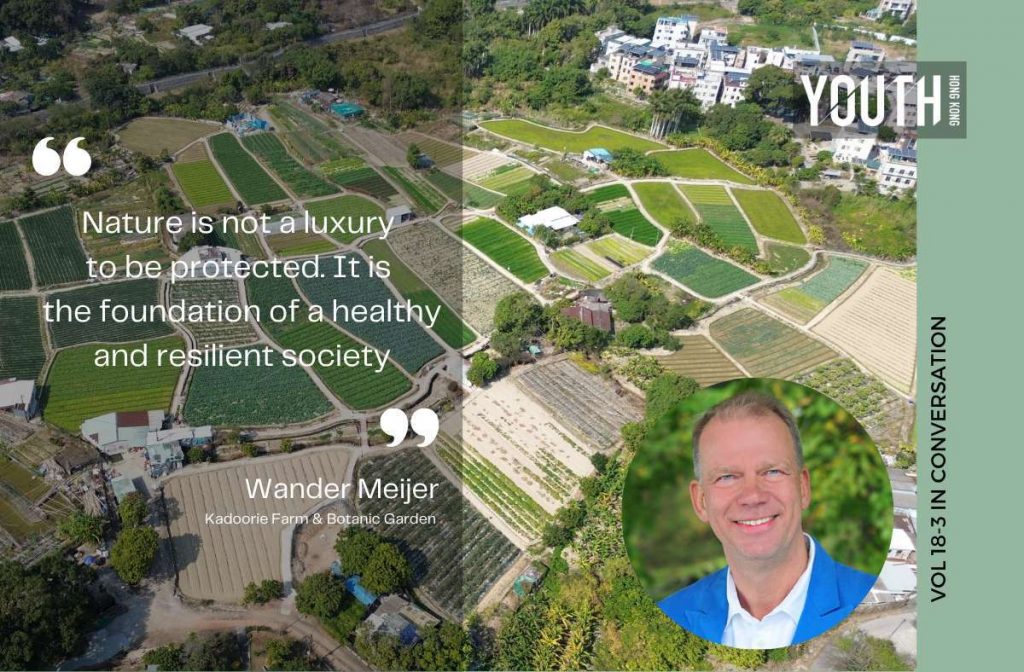
“Nature is not a luxury to be protected. It is the foundation of a healthy and resilient society,” says Meijer, who has led KFBG since 2021.
KFBG is a non-profit organisation, with its main site located on the northern slopes of Tai Mo Shan in Hong Kong’s New Territories, where nature conservation, education and sustainable living come together. Its Ecological Advisory Programme has provided advice to government, NGOs, developers, academics and communities on biodiversity‑friendly policies and project design.
Nature conservation and development should not be viewed as “competing objectives,” but as complementary priorities where healthy ecosystems support sustainability, climate resilience, human well-being and economic stability, according to Meijer.
Despite being one of the world’s most densely populated urban areas with limited developable land, he says, Hong Kong continues to support rich biodiversity and a wide range of valuable habitats, reinforced by growing public awareness and policy frameworks such as the latest Biodiversity Strategy and Action Plan published in 2025.
With initiatives like the Northern Metropolis underway, large-scale development projects are also placing increasing pressure on wildlife habitats. To protect these areas, Meijer stresses the importance of identifying and protecting habitats at the earliest planning stage. Key environments in the Northern Metropolis include inland and coastal wetlands, active and abandoned fishponds and farmlands, watercourses, woodlands and wildlife corridors.
Meijer believes that planning must follow a sequence: avoiding impacts where possible, minimising unavoidable impacts, and only then considering mitigation or compensation measures. The real challenge, he notes, is designing projects to retain the “ecological assets” and “proximity of nature” that make Hong Kong liveable and unique.
Looking ahead, Meijer highlights that protecting these resources requires full community involvement. He mentions the concept of “Ecological Civilisation,” a proposed human development model where social and economic systems are redesigned for long-term sustainability. Guided by the principles of Ecological Civilisation, he says safeguarding the environment is not the job of a single age group or sector, but a responsibility shared by the whole community. ■