


by Winter Chiu
Sometimes growing up means learning to see the complexities in our favourite childhood stories.
I grew up believing in magic.
At 5 years old, I started burying my head in all sorts of storybooks and fairytales: Cinderella, Goldilocks, Pinocchio, you name it. Needless to say, I am (and will forever be) a Disney kid. I still remember getting up at 6 in the morning, hopping on Disney Junior, and sitting still with my eyes glued to the TV screen when Sofia the First aired its finale in 2018. I believed in happily-ever-after, and that “good triumphs over evil every single time”.
But if I’m being honest, I didn’t just love magic — I feared what came with it. Villains terrified me. The moment the music tone darkened, or when a shadow appeared on screen, I would instantly tense up, bracing myself for the all-too-familiar entrance of evil. Even the tiniest jump scare made me flinch and sent my heart racing as I hid my face behind my hands, peeking through my fingers just enough to know when it was safe again. To me, evil wasn’t just part of the story; it was something overwhelming, something I was terrified of.
Harry Potter was not a part of my life until I was 12. Ironically, my first encounter wasn’t through books or movies, but a friend’s profile picture. It showed a girl with bushy brown hair, eyes bright and determined, and a stack of books in her arms. “Who’s that?” I asked. “That’s Hermione.” Hermione? What kind of name is that? Who is she? Is she real? Curious, I looked up the trailer of the first Harry Potter movie. Dim lighting, objects flying, and then — “TROLL IN THE DUNGEON!” — I was completely terrified. My younger sister, however, was immediately intrigued. Not wanting to seem like I was backing out, I begrudgingly agreed to watch Harry Potter and the Philosopher’s Stone. Though, to tell you the truth, I spent most of it peeking through half-closed eyes.
Over time, I grew to love Harry Potter. I’m not exactly sure when or how it happened, but it did. Harry Potter opened a door to a whole new world of magic and imagination, and slowly, I found myself gathering the courage to explore stories with a darker edge. But what I didn’t realise was the dark side of the story — at least not until I read Manacled, a fanfiction of Harry Potter. It’s dark not in the way that once scared me, but in the deeper meanings it carried beneath the surface.
Manacled completely changed the way I saw the wizarding world.
In the novel, Voldemort wins, Harry dies, and the world that remains is neither one of magic nor wonder, but of control, oppression and survival. Hermione, being the last member alive, is imprisoned with manacles, stripped of her freedom, and forced into a system designed to break her. The story, spanning over 1400 pages, is unflinching in its portrayal of trauma, power, and what people will do to endure them. Reading it felt like peeling back a layer of the deeper Harry Potter universe, which I never knew existed.
Manacled didn’t invent darkness; it merely exposed what was hidden within J.K. Rowling’s original text. It brings forth a question the mainstream series often sidesteps: What if good doesn’t win? What if the system never changes? What if pain isn’t noble, but simply human?
That’s when I began to realise that Harry’s story was not just about magic, but also endurance. He has lived in a cupboard for 11 years, neglected, unloved, yet no one in the mainstream discussion ever questioned it. We all accepted it as part of his journey, something that made him stronger for the wizarding world. But when Harry enters the wizarding world, his suffering is not acknowledged. Instead, it is redirected to his new responsibilities, dangerous adventures, and impossible expectations, as if pain was something to be carried silently and buried deep within. What I once admired as resilience now looks like normalised neglect.
The world I once dreamed of escaping to also began to look different. The wizarding world is portrayed as a free, magical and superior alternative to our own. But it isn’t. The same things that exist in reality — social hierarchies, stereotypes, racism and prejudice — are there too: Blood status divides witches and wizards, with Muggle-borns being insulted and treated as inferior Mudbloods; House-elves like Dobby and Kreacher are trapped in servitude, and even when they are mistreated, many characters treat that as normal; Trolls are feared and dismissed: and power remains in the hands of only a few. Magic doesn’t erase inequality; it reinforces it. The wizarding world is not a perfect escape from reality; it is reality, just dressed in robes and spells.
Now, I see the characters I loved differently. Hermione has always been my favourite: she is brilliant, hardworking, and relentless. She earns everything through effort, yet is rarely placed in the spotlight in the way she deserves. In the Philosopher’s Stone, she is called a “nightmare” before becoming the very person who saves the trio from danger. In the Goblet of Fire, she is the one who prepares, researches, and thinks ahead, yet Harry is still the one people celebrate most. Harry Potter, on the other hand, is admired not because of his heroic acts, but because of his fame from a measly scar. Even friendship, what I saw as the most innocent core of the whole series, is more complicated than I once believed. I used to see it as pure loyalty, something unbreakable. But now? The tension, jealousy, and pressure underneath are eating me alive. In Manacled, Harry’s sole belief in “good always wins” causes the Order to lose the battle, rendering it tragically fragile. There is no doubt the bond between Harry and his friends is real, but it is also shaped by the shared danger and emotional weight. What ties them isn’t just friendship, but survival.
What unsettles me most is how the story treats suffering. Growing up, I believed that hardship made you stronger, that enduring pain meant you were chosen for something greater. Harry’s struggles felt meaningful, even necessary. But now I question that idea. Why should suffering be a requirement for worth? Why must being abused, hunted, and constantly placed in danger become part of what makes Harry “special”? Why is Hermione’s exhaustion from doing the work of everyone around her treated almost like a joke? These details make me wonder whether the story quietly teaches us to glorify pain instead of questioning it.
Realising all of this did not ruin Harry Potter for me. If anything, it made me understand it more deeply. It reminds us that not everything is as it is portrayed. The stories we grow up loving are not just sources of entertainment; instead, they shape how we understand the world. When we accept them at face value, we risk overlooking the deeper messages they carry. When we question them, we begin to see more clearly — not just the story itself, but the values it reflects.
That is why Manacled matters to me so much. It does not take away the magic I had once loved. Instead, it helps me see the shadow that had always been there. It forces me to look again at the world I thought I knew, and to realise that even the most comforting stories can carry uncomfortable truths.
Learning to look beyond the surface is an essential skill, both in literature and in life. It allows us to challenge assumptions, recognise hidden biases, and think critically about the systems around us. A story can be both magical and flawed, inspiring and unsettling. In the end, Harry Potter is not just a tale of light defeating darkness, but a reminder that light and darkness often coexist. And perhaps the most important lesson it offers is: to truly understand something, we must be willing to look beyond what we are first taught to see.
I grew up believing in magic, and I still do. But now I know that magic is never only light. Sometimes, it is the shadow too. ■
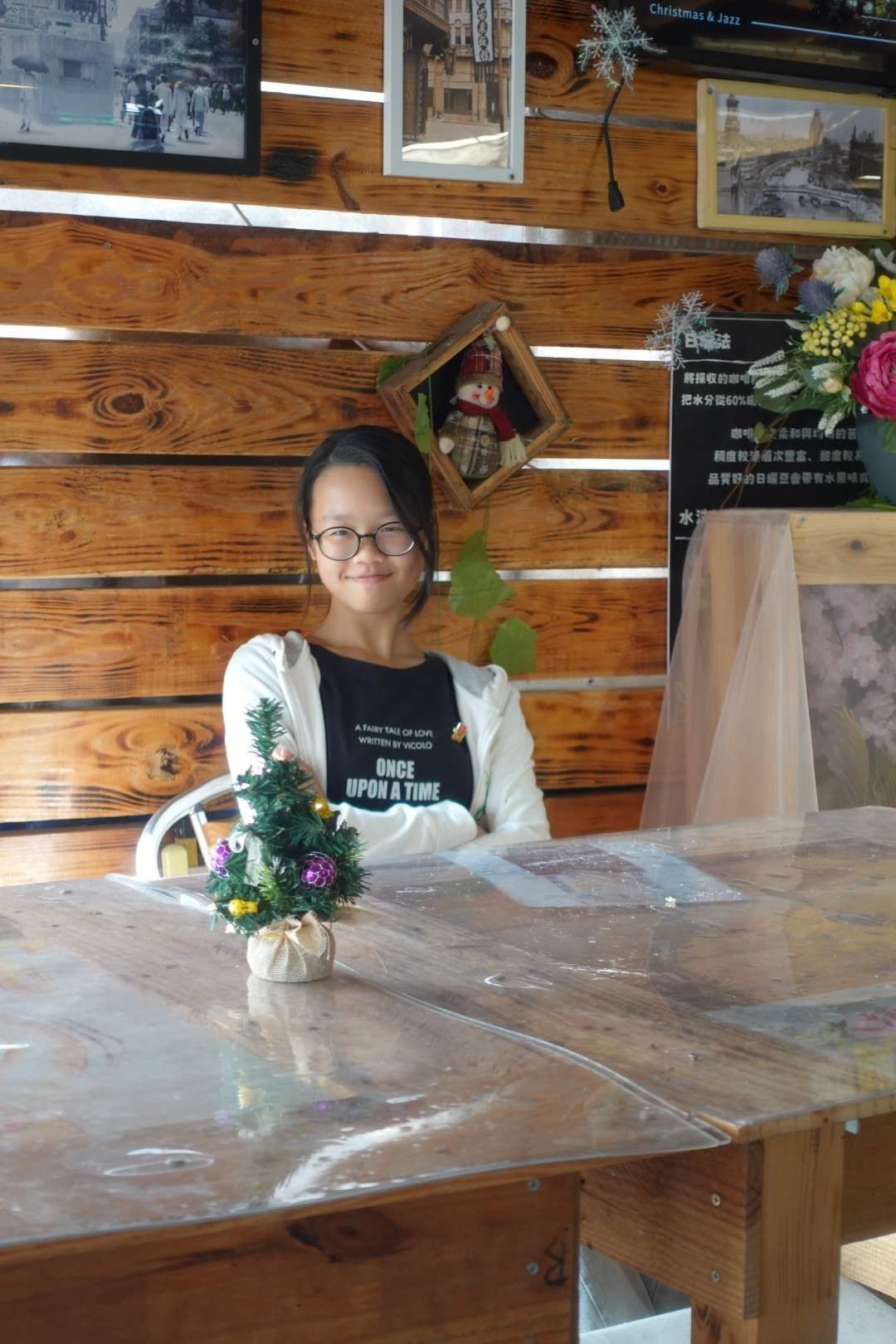 Winter Chiu, 16, is from N.T. Heung Yee Kuk Yuen Long District Secondary School. When she isn’t working on her latest writing project, you can usually find her immersed in a good romance novel, participating in MUNs, or volunteering across Hong Kong. Find her on Instagram @winterc_ty