

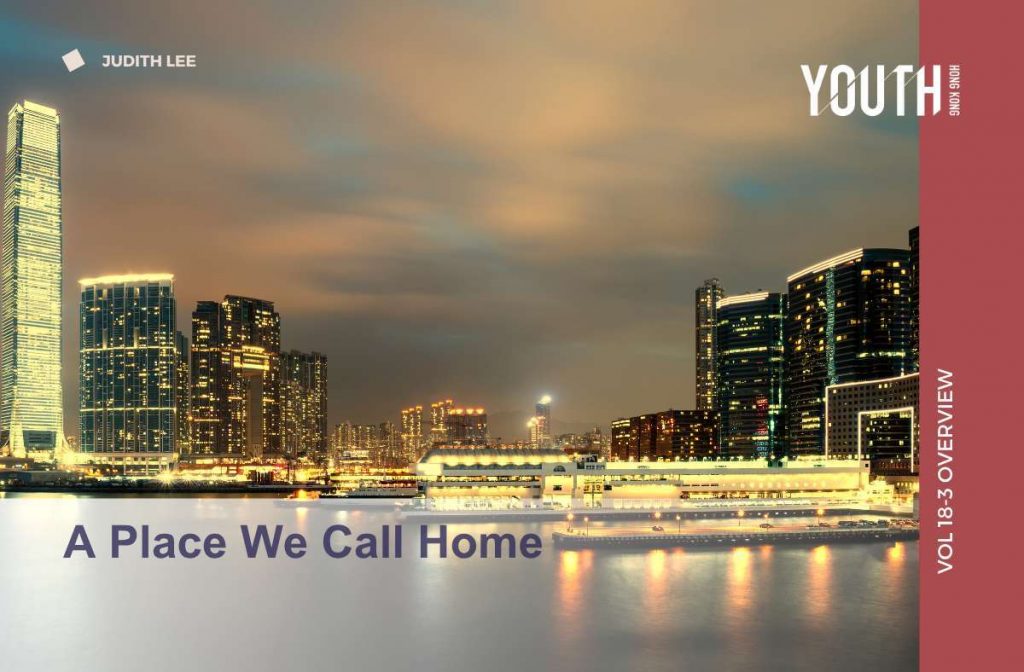
Have you ever stopped and asked what gives a skyline its soul?
by Judith Lee
In late 2026, as the final spires of Antoni Gaudí’s Sagrada Família reached into the Barcelona sky — completing a century-long dialogue across generations — we were reminded of a quiet truth: cities are not built overnight, nor are they built merely for the present. Gaudí’s masterpiece is so much more than stone, light and hyper-complex geometry; it stands as a tribute to perseverance, collective faith and intergenerational continuity.
It also raises a question for Hong Kong. As we look back on three decades of transformation, is our city developing in ways that honour the lives lived within it? And what lasting spirit are we leaving behind for the generations that will walk these streets after us?
Across Asia, a delicate dance between heritage and progress is taking place and defining urban survival. In Kyoto, preserving traditional wooden machiya townhouses weaves centuries of Zen spatial mindfulness into the fabric of daily life. In Seoul, the Cheonggyecheon Stream, an 11-km-long public park and restored waterway from the Joseon Dynasty, stands as a testament to how modern vitality can co-exist with both ecological roots and historical memory. These examples prove that conservation isn’t about maintaining a static museum; it is about nurturing a living canvas for contemporary culture.
Human Memories & Modern Rhythms
Turning back to modern Hong Kong, daily life is shaped by dense crowds, soaring skyscrapers and an extraordinarily efficient public transport network. Every morning, millions navigate a hyper-complex web of elevated footbridges, air-conditioned malls and subterranean pathways. Yet beneath this impressive feat of engineering lies a deeply personal human narrative.
For those who have grown up here over the past 30 years, urban development is far more than zoning rules or land deals. It is what shapes our daily rhythms, routines and relationships. In other words, it is where a sense of belonging takes root.
Growing up in the 1990s, my childhood weekends were defined by simple, grounded routines. The rattle of the Peak Tram, the smell of engine oil on the Star Ferry and the roar of low-flying jets cutting through the laundry-lined roofs above Kai Tak were the soundtrack to daily life.
Kai Tak Airport was more than just a reclaimed strip of land turned into an international aviation hub. It was our shared heartbeat connecting thousands of neighbours in Kowloon City. When the runway closed in 1998 and the area was redeveloped, the city gained another modern commercial district and high-rises, but it had lost something vital: that close-knit street-level network, the informal gathering spots and the raw community vitality that made my neighbourhood feel alive.
Moving from childhood into adulthood means learning to adapt to constant change. Yet, adapting to change does not mean forgetting what holds a community together. Amidst rapid construction, Hong Kong’s urban soul still survives in human-scaled spaces: cha chaan tengs that create a lively street-level rhythm, alongside the quieter alleyways, indie cafes and design boutiques around Wanchai’s Sun, Moon and Star Streets. These are a comfortable backdrop of daily life: living neighbourhoods that anchor a sense of home as the city changes and grows.
Reclaiming the Streets
For today’s generation, living in a city should mean having the active agency to shape it. Too often, residents are treated as passive consumers, squeezed into ever-smaller apartments and pushed out of privatised commercial spaces.
Yet across Hong Kong, a quiet form of youth-led place-making is underway. Young creatives are moving into the upper floors of aged structures in Sham Shui Po and Central, repurposing them into independent bookstores, community archives and cultural salons. Others gather along the Kwun Tong Promenade and in industrial lofts, turning leftover urban spaces into vibrant venues for art and music. Rather than waiting for top-down municipal plans, they assert spatial agency from the bottom up. They demonstrate that heritage preservation is not about freezing time, but about providing an open canvas for self-expression and genuine connection.
A Place We Belong
When we strip away rigid commercial boundaries and sterile property metrics, urban planning can become an act of shared empathy, forming a compass for practical, liveable and wanted urban design.
Looking ahead to the next 20 to 30 years, true urban progress cannot be measured alone by concrete, land yield, or financial return. Like Gaudí’s Sagrada Família, the city we build will be inherited by people we may never meet. Its value will lie not only in what rises above the skyline, but in whether it carries forward the memories, connections and sense of belonging that make a place worth calling home.
That responsibility cannot rest with planners, developers or government alone. It belongs to all of us who live, work and grow up here. Rather than standing back and accepting the city as something done to us, we must take part in shaping it: by speaking up for the places that matter, supporting the communities that keep them alive, and insisting that progress makes room for the lives already rooted here. Because ultimately, we inherit not only the skyline of our city, but also the everyday places where we belong. ■